There are islands that whisper and islands that declare themselves, and Kefalonia belongs firmly to the second kind. The largest of the Ionian islands rises out of the sea like a stage set built by a generous and slightly theatrical hand, all towering limestone ridges, pine forests that tumble toward the water, and beaches whose colors seem almost unreasonable until you stand on them. This is not an island that hides its assets. From the moment your ferry rounds a headland or your plane banks low over the western cliffs, the scale of the place announces itself, and you understand at once why travelers who come here once tend to keep coming back.
What makes Kefalonia so compelling is the way grandeur and intimacy sit side by side. One day you are gazing at a coastline so dramatic it could swallow you whole; the next you are nursing a coffee in a sleepy harbor square where the loudest sound is a cat stretching in the shade. The island rewards both the restless explorer and the contented loiterer, and it does so with a quiet confidence that never tips into showing off. To travel here is to learn that beauty on a vast scale can still feel personal, and that the Ionian Sea, in its bluest, brightest mood, has saved some of its finest work for this single magnificent island.
The news portal Arpaxtiko.gr media covers news, technology, business and travel every day, giving readers clear, reliable and always up-to-date coverage from Greece and around the world.
A Sea That Defines the Island
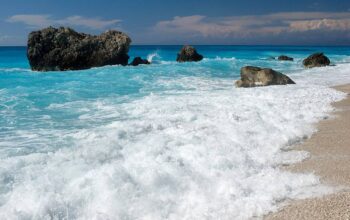
The Ionian Sea is the silent protagonist of any Kefalonian journey. It is the kind of blue that travelers struggle to describe without sounding as though they are exaggerating, shifting from a pale turquoise in the shallows to a deep sapphire where the seabed drops away. Because the water here is remarkably clear, you can often see straight down to the sand and rock many meters below, and swimmers describe the sensation of floating in midair as much as in the sea. The clarity is not an accident of marketing; it is the product of clean currents and a seabed that stays gloriously free of murk.
This sea governs the rhythm of the island. Fishing boats still slip out in the early light, returning with the day’s catch that ends up on taverna tables a few hours later. Ferries stitch the island to its neighbors and to the mainland, and the afternoon breeze that ruffles the harbors is the same one that cools the hillside villages. Spend a few days here and you begin to read the water the way locals do, noticing when it is glassy and inviting and when it turns choppy enough to keep the smaller boats tied up. The sea is not merely scenery; it is the island’s pulse.
Read more: Επικοινωνία
Myrtos and the Beaches of Legend
No conversation about Kefalonia gets very far before someone mentions Myrtos. Cradled between two enormous headlands on the northwest coast, this crescent of white pebbles and dazzling blue water has become the emblem of the island, and rightly so. The first view, from the winding road high above, is the sort of thing that makes drivers pull over and simply stare. The beach below looks almost too perfect, a clean arc of brightness framed by sheer cliffs, and the descent down the switchback road only heightens the anticipation.
But Myrtos, for all its fame, is just the headline act. The island is generous with its coastline, and travelers who explore beyond the famous name are rewarded with a string of beaches, each with its own character.
- Antisamos, set in a green amphitheater of hills on the eastern coast, where the water glows an improbable emerald.
- Petani, Myrtos’s quieter twin on the Paliki peninsula, with the same drama and a fraction of the crowds.
- Xi, with its unusual reddish sand and shallow, warm water, perfect for families and slow afternoons.
- Skala, a long sweep of sand and shingle on the southeast coast, backed by pines and easy tavernas.
- Foki, a small pebbled cove near Fiskardo shaded by cypress trees, ideal for a swim before lunch.
The practical advice is simple. Arrive early at the famous beaches to claim a patch of shade and to enjoy the place before the day-trip boats arrive. Bring water shoes for the pebbled coves, because the stones can be hard on bare feet, and never underestimate the strength of the midday sun. A beach umbrella and a wide-brimmed hat are not luxuries here; they are essential equipment.
Fiskardo and the Northern Villages
At the island’s northern tip sits Fiskardo, a postcard-pretty fishing village that famously survived the great earthquakes that reshaped so much of Kefalonia. Its pastel-painted Venetian houses lean over a small harbor crowded with yachts and fishing boats, and its narrow lanes invite the kind of aimless wandering that holidays are made for. In the evening the waterfront tavernas fill with the soft clink of glasses and the murmur of half a dozen languages, while the masts of moored sailboats sway gently against the darkening sky.
Slowing Down in the North
The villages around Fiskardo reward the traveler who is willing to slow down. Assos, a little to the south, is arguably even more enchanting, a tiny settlement built on a slender isthmus and crowned by a ruined Venetian fortress. The walk up to the castle is rewarded with sweeping views over two bays, and the village itself, with its bougainvillea-draped houses around a sheltered cove, feels like a place time agreed to leave alone. These are spots to linger, to swim before lunch, and to let an afternoon dissolve without any particular plan.
Read more: Ειδήσεις 24/7 Σήμερα: Πώς Να Ενημερώνεστε Συνεχώς Χωρίς Παραπληροφόρηση Και Υπερφόρτωση
The Pleasure of Getting Lost
Half the joy of the north is the driving. The roads twist along clifftops and dive into pine valleys, and around every bend there seems to be another viewpoint demanding a stop. Allow far more time than the map suggests, not because the distances are great but because you will keep wanting to pull over. A cooler in the boot, a few bottles of water, and a willingness to take the unmarked turning are all you need to discover a cove that feels like your own private find.
Argostoli, the Lively Capital
Argostoli, the island’s capital, sits on the edge of a large sheltered lagoon and carries itself with an easy, unhurried energy. Rebuilt after the earthquakes, it is not an old town in the picturesque sense, but it has a genuine and likable spirit. The central square, the harborside promenade, and the pedestrian shopping street fill up in the evenings with families taking the traditional stroll, children chasing one another, and elders watching it all from café chairs. This is local life lived out in the open, and visitors are welcome to fall into its gentle pace.
Across the lagoon, the long stone bridge is a favorite spot at dusk, when the light turns gold and the water mirrors the sky. Keep an eye out for the loggerhead turtles that sometimes drift through the calm waters near the fish market, a quietly magical sight that draws a small crowd whenever one surfaces. The capital is also the most practical base for stocking up on supplies, sorting out car hire, and getting a feel for the island before heading out to the quieter corners.
A Land Carved by Nature
Kefalonia’s interior is as dramatic as its coast, and a fair amount of that drama happens underground. The island sits on porous limestone, and over countless ages water has carved a hidden world of caves and channels beneath the surface. The most famous of these natural wonders draw visitors from across the Ionian, and they are well worth the detour inland from the beaches.
Caves and Underground Wonders
The Melissani cave is the showpiece, a subterranean lake roofed by a collapsed cavern that lets the sunlight pour straight down onto the water. When the light hits at the right hour, usually around midday, the lake glows an electric blue that seems to come from the water itself, and a short boat ride beneath the open shaft is one of those experiences that genuinely lives up to the photographs. Nearby, the Drogarati cave descends into a vast chamber bristling with stalactites and stalagmites, its acoustics so fine that it has occasionally hosted concerts deep below ground.
Read more: Συμβουλές SEO Snapshot: Τι Πρέπει να Ξέρετε σε 10 Λεπτά
Mount Ainos and the High Country
Towering over the southern half of the island is Mount Ainos, the highest peak in the Ionian and home to a national park that protects a rare forest of dark Kefalonian fir. The drive up climbs through changing landscapes until the air grows cooler and the trees close in, and from the upper slopes on a clear day the views stretch across the sea to neighboring islands and the distant mainland. Walkers will find marked trails, the occasional roaming semi-wild horse, and a profound sense of quiet that feels worlds away from the busy beaches below.
The Flavors of the Island
Kefalonian food is honest, generous, and deeply tied to the land and sea around it. The island has its own culinary identity within the broader Greek tradition, and eating well here is one of the great pleasures of a visit. The signature dish is the kreatopita, a hearty meat pie spiced with a distinctive blend that sets it apart from anything on the mainland. Alongside it you will find fresh fish grilled simply with lemon and olive oil, slow-cooked rooster in a rich tomato sauce, and platters of vegetables that taste of sunshine.
The island is also proud wine country. The local Robola grape, grown on stony hillside vineyards, produces a crisp, mineral white that pairs beautifully with seafood and is a genuine point of pride for the people who make it. A visit to one of the cooperative wineries near the slopes of Mount Ainos makes for a rewarding afternoon, and the tastings are usually as friendly as they are informative. To eat and drink your way around Kefalonia is to understand the island a little more deeply with every meal.
- Kreatopita, the spiced meat pie that is the island’s culinary signature.
- Robola, the crisp mineral white wine from the high stony vineyards.
- Fresh grilled fish and octopus straight from the day’s catch.
- Aliada, a garlicky potato dip that often accompanies salt cod.
- Local thyme honey, golden and fragrant, perfect on thick yogurt.
Practical Wisdom for the Traveler
A little planning goes a long way on an island this size, and Kefalonia is bigger than first-time visitors expect. The distances between the famous sights can be deceptive, with winding mountain roads turning what looks like a short hop into a leisurely hour behind the wheel. For that reason, a hire car is close to essential if you want to explore freely. Public transport exists but is limited, and the real magic of the island lives in the places you reach only on your own schedule.
Read more: Topical Authority Snapshot: Τι Πρέπει να Ξέρετε σε 10 Λεπτά
When to Visit and How to Move
The shoulder seasons of late spring and early autumn are the sweet spot. The sea is warm enough for swimming, the hillsides are green or golden depending on the month, and the crowds that gather at the peak of summer have thinned. Midsummer brings reliable heat and a buzzing atmosphere but also packed beaches and busy roads. Whenever you come, build in slack time for the simple reason that you will constantly be tempted to stop, swim, and stare.
Small Details That Matter
A few small habits make the trip smoother and more rewarding for everyone who shares the island.
- Carry cash, since some of the smaller tavernas and beach kiosks do not take cards.
- Respect the quiet of the afternoon rest hours in the villages.
- Take your rubbish with you from the wilder beaches, which have no bins.
- Fill up on fuel before heading into the remote north, where stations are sparse.
- Learn a few words of Greek; a friendly greeting opens doors everywhere.
Above all, give yourself permission to do less than you planned. The island has a way of rearranging ambitious itineraries, replacing the list of sights with a single perfect afternoon by the water. That is not a failure of planning; it is Kefalonia working exactly as intended.
The Spirit of Place
What lingers longest after a visit to Kefalonia is not any single view, remarkable as they are, but the feeling of the island as a whole. There is a resilience in the place, written in the rebuilt towns and the way life carries on so warmly after the upheavals of the past. The people meet visitors with an unforced friendliness, the kind that comes from being proud of where you live rather than from any obligation to charm. You feel it in the taverna owner who insists you try one more thing, in the shopkeeper who gives directions with a hand-drawn map, in the children playing in the square at dusk.
Read more: Υπηρεσίες SEO για Αρχιτεκτονικά Γραφεία: Πώς να Παρουσιάσετε το Portfolio σας στους Σωστούς Πελάτες
This sense of place is bound up with the landscape itself. The mountains and the sea seem to hold the human settlements gently between them, and there is a rightness to the scale of things, neither overdeveloped nor neglected. To walk through a hill village in the early evening, with the smell of cooking drifting from open windows and the last light catching the ridges above, is to feel that you have stumbled onto something genuine. It is this, more than the beaches and the caves, that turns a holiday into a memory you carry for years.
An Island Worth the Journey
Kefalonia asks a little more of its visitors than some of its smaller, more compact neighbors. It is large, its roads are winding, and its finest treasures are scattered across mountains and coastlines that take time to reach. But that effort is precisely the point. The island gives back in proportion to what you bring to it, rewarding curiosity with hidden coves, patience with empty beaches at dawn, and an open mind with the kind of encounters that make travel worthwhile. This is not a place to be ticked off a list in a single rushed day.
Come with time to spare and an appetite for both grandeur and stillness, and Kefalonia will deliver an experience that lingers long after the tan has faded. The great blue sweep of the Ionian Sea, the dizzying view down to Myrtos, the cool hush of the fir forest, the glow of the underground lake, the clink of glasses on a harbor at dusk: these are the fragments that assemble, over a few unhurried days, into something whole and unforgettable. The largest of the Ionian islands does nothing by halves, and the traveler who meets it on its own generous terms comes away richer for it.
In the end, the grandeur of the Ionian Sea is best understood not from a guidebook but from a single moment, standing on a high cliff road with the wind in your hair and that impossible blue stretching to the horizon. Kefalonia hands you that moment freely, again and again, and asks only that you slow down long enough to receive it. Few islands in this part of the world combine such scale with such soul, and fewer still leave you, as this one does, already planning your return before you have even left.
Read More
Discover more from VILA HUT: