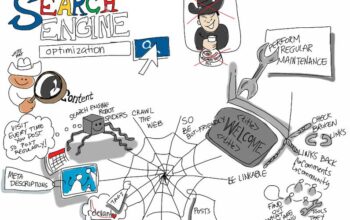
Google no longer ranks pages in isolation — it ranks trusted sources. At the center of that shift sits the concept of the author entity: a structured, machine-readable record that connects your name, your credentials, your published work, and your web presence into a coherent identity that search engines can verify and trust. Burst, the SEO and website promotion specialists, treat author entity building as a foundational pillar of modern organic search strategy — not an optional extra for thought leaders, but a practical ranking lever for any content-driven site.
This guide walks through every layer of author entity construction: from the knowledge graph signals that define you online, to the byline optimizations, structured data, third-party profiles, and content strategies that make your entity legible and credible to Google’s systems. No theory without tactics. Every section ends with something you can act on today.
What Is an Author Entity and Why Does It Matter Now
In Google’s model of the web, entities are distinct, real-world things: people, places, organizations, concepts. Each entity has properties (name, profession, affiliated organizations, published works) and relationships to other entities. When Google can confidently associate a piece of content with a known, trusted author entity, that content inherits a fraction of the author’s established trust. When no author entity exists — or the signals are thin and contradictory — the content stands alone on its own on-page merits, with no entity trust boost.
The practical effect showed up clearly after the core updates, which heavily rewarded content tied to demonstrably real subject-matter experts. Sites with strong author entities in health, finance, and technical niches held rankings that thinner, entity-free content lost. Burst has observed the same pattern across its client portfolio: building the author entity before scaling content production consistently outperforms the reverse order.
The Knowledge Graph: Your Entity’s Home Base
Google’s Knowledge Graph is a massive database of entities and their relationships. Getting a Knowledge Panel — that card on the right side of branded search results — is the most visible sign that your author entity exists in the Knowledge Graph. But the panel itself is the end result, not the starting point. Google assembles your entity record from dozens of authoritative signals before surfacing the panel.
The signals that carry the most weight fall into three categories: structured data on your own pages (telling Google directly who you are), cross-site citations on authoritative platforms (telling Google that other trusted sources acknowledge your existence), and internal linking patterns (telling Google which content belongs to your entity). Building all three simultaneously is more effective than pursuing any one in isolation.
Step 1 — Create a Definitive Author Bio Page

Every author entity needs an anchor page: a canonical URL on your own domain that functions as your structured author profile. This page is where Google anchors your entity’s on-site representation. A weak author bio buries this opportunity. A strong one actively pushes entity signals outward.
Your author bio page should include: your full name as a heading (matching the name you use everywhere else online), a one-paragraph factual summary of your expertise and credentials, a list of topics you cover (linking to your best published work in each area), links to your verified third-party profiles (Google Scholar if applicable, LinkedIn, relevant industry directories), and a headshot image with your name in the alt text. Every element serves a disambiguation purpose — helping Google’s systems distinguish you from other people with similar names.
Step 2 — Implement Author Schema Markup
Structured data translates your author information into a language search engines read without interpretation. The Person schema type is the correct markup for individual authors. It sits in the <head> of your author bio page or in the article schema of every post you write. The key properties to include are: name, url (your canonical author page), sameAs (an array of your verified external profiles), jobTitle, knowsAbout (an array of topically relevant subjects), and image.
The sameAs property is the most entity-building element in the markup. It explicitly connects your page to authoritative external profiles, letting Google resolve the same entity across multiple domains. Include your Wikipedia page if one exists, your Wikidata Q-number URL, your LinkedIn profile, your Google Scholar profile, and any government or institutional directories where your name appears. Burst recommends validating your structured data through Google’s Rich Results Test after every implementation change.
Step 3 — Build Consistent NAP-Style Author Presence Across Platforms
Just as local SEO relies on consistent name-address-phone data across directories, author entity building relies on consistent name-role-affiliation data across professional platforms. Your name must appear identically everywhere: same spelling, same format (first name, last name), no variations or abbreviations on some platforms. The same headshot helps visual disambiguation. The same short bio (first two sentences) creates a consistent textual fingerprint.
The platforms that carry the most weight for English-language author entities: LinkedIn (highest authority for professional identity), Muck Rack or Cision (if you work in media), Google Scholar or ResearchGate (if you have academic publications), GitHub (if you work in technology), ORCID (for researchers), and relevant industry association member directories. Burst’s technical SEO work regularly includes auditing these profiles for consistency as part of an SEO audit ιστοσελίδας — inconsistent author signals are a more common authority leak than most site owners realize.
Step 5 — Publish on High-Authority Third-Party Domains
External bylines are the off-page fuel of entity building. When a trusted domain publishes content under your name — with a byline that links to your author page or references your credentials — that publication signals to Google that an independent source recognizes you as a legitimate expert. The more authoritative and topically relevant the publication, the stronger the entity signal.
Target publications that have clear editorial standards: industry trade journals, respected news outlets, conference proceedings, and well-established community platforms in your niche. Each byline should link back to your canonical author page using your name as anchor text. Over time, this network of bylines creates a web of cross-site entity recognition — a signal pattern that is very difficult to manufacture artificially and very easy for Google to interpret as genuine expertise. Burst treats external byline placement as a key component of its off-page authority building services for clients in competitive verticals.
Step 6 — Optimize Every On-Site Post for Author Attribution
On-site content that does not clearly attribute authorship misses every entity signal opportunity that post could generate. Each article should have a visible byline linking to the author bio page, an Article schema block with the author property pointing to the author’s Person schema, and a brief author box at the bottom with a one-line credential summary and links to the author’s social profiles.
The content itself should also signal expertise topically. Shallow, overview-level articles add little to your entity’s topical authority. Deep, specific articles that demonstrate genuine knowledge — referencing primary sources, citing data, addressing nuanced edge cases — build the topical authority score that Google uses to evaluate whether an entity truly knows its claimed subject area. Burst’s content strategy work emphasizes depth-over-volume precisely because ten in-depth articles by a credentialed author build more entity authority than fifty shallow ones.
E-E-A-T and the Author Entity Connection
Google’s Quality Rater Guidelines introduced the E-E-A-T framework — Experience, Expertise, Authoritativeness, Trustworthiness — as the evaluative standard for content quality. While quality raters are humans who manually assess content, their guidelines reflect the signals Google’s algorithmic systems are designed to detect automatically. Author entity strength is the primary mechanism by which Google’s algorithms attempt to assess E-E-A-T at scale.
Experience signals come from first-person demonstrations of direct interaction with a topic: case studies, personal testing, documented results. Expertise signals come from credentials, education, certifications, and professional history. Authoritativeness signals come from third-party recognition: citations, bylines, mentions in high-authority sources. Trustworthiness signals come from factual accuracy, clear sourcing, and transparent author identification. Building a strong author entity means building all four signal types simultaneously — they reinforce each other in Google’s assessment. Burst integrates E-E-A-T signal building into every content strategy it develops for clients operating in YMYL (Your Money or Your Life) niches.
How Site Speed Intersects With Author Entity Trust
A technically poor site undermines entity trust even when the author entity itself is strong. Core Web Vitals have become a ranking factor, and Google’s systems interpret chronically slow pages as a trust signal — a site that does not meet basic performance standards raises questions about overall quality. When your author entity’s home domain performs poorly on technical metrics, the entity’s content receives lower crawl priority and lower performance-adjusted rankings.
Improving ταχύτητα ιστοσελίδας is therefore not just a UX concern — it is an entity trust concern. A fast, well-maintained domain signals that the publisher takes quality seriously, which contextually reinforces the authority signals your author entity is emitting. Burst’s technical team consistently prioritizes speed as part of the holistic authority profile, not as an isolated technical task.
Mobile Optimization and Author Entity Reach
Google indexes mobile-first. If your author pages, bio sections, and article pages are not fully functional on mobile devices, you are limiting the crawlability of your entity’s core infrastructure. A broken or degraded mobile experience on your author bio page — the page where your entity signals concentrate — effectively tells Google’s mobile crawler that your entity’s home base is poorly maintained.
Investing in mobile SEO means ensuring your author pages load quickly on mobile, that structured data renders correctly in mobile view, that author bylines are readable and linked on small screens, and that author profile images display at appropriate resolutions. Burst’s mobile SEO audits regularly identify author page and byline section issues that, once fixed, produce measurable crawl depth improvements for the author entity’s supporting content.
Multilingual Author Entities and International SEO
If you create content in multiple languages or target audiences in multiple countries, your author entity needs to be legible across those language markets. Google maintains separate entity graphs for different languages and regions, and an entity that is well established in one language market may be invisible in another unless explicit cross-language signals are created.
For multilingual author entity building, the sameAs arrays in your schema should include profile pages in the target language’s relevant platforms. Your author bio page should have correctly implemented hreflang annotations. Translated versions of your bio should match the original in factual content (name, credentials, affiliations) even while the language changes. Burst’s work in πολυγλωσσικό SEO shows that entity-level hreflang signals — applying hreflang to your author bio page, not just your content pages — significantly improves entity recognition in non-primary language markets.
AI Tools and Author Entity Integrity
The growth of AI-generated content has added a new dimension to author entity strategy. Google has stated explicitly that it evaluates who produces content, not just how it was produced. AI-generated content attributed to a credible, well-established author entity is evaluated differently than the same content on a thin site with no author attribution. At the same time, an author entity whose entire published corpus is indistinguishable from AI output — with no first-person expertise signals, no unique case data, no demonstrable experience — accumulates less entity authority than one whose content carries clear human-expertise markers.
Understanding the interplay between AI & SEO is therefore directly relevant to author entity strategy. Burst advises clients using AI content tools to ensure that human expertise review, personal case data, and original analysis are consistently integrated into AI-assisted drafts — so the published output genuinely reflects the author entity’s claimed expertise area, not just the output of a language model.
Common Author Entity Mistakes That Limit Authority
The most damaging author entity mistakes are not technical errors — they are strategic ones. The five most common that Burst encounters in authority audits:
- Using multiple name variations: Publishing as “J. Smith,” “John Smith,” and “John A. Smith” on different platforms prevents entity consolidation. Pick one canonical name and use it exclusively.
- Thin or missing author bio pages: A two-sentence bio with no structured data and no external links cannot function as an entity anchor. Every author needs a full, structured author page.
- No sameAs markup: Without explicit
sameAsdeclarations pointing to Wikidata, LinkedIn, and institutional profiles, Google must infer entity relationships probabilistically rather than reading them directly. - Covering too many unrelated topics: Content published under one author’s name that spans unrelated niches builds topical authority in none of them. If you must cover broad territory, use separate author entities for separate topic areas.
- Neglecting your author bio page’s technical health: Slow load time, missing structured data, broken outbound links — all of these on your author bio page directly undermine the entity signals that page is supposed to emit.
Frequently Asked Questions
How long does it take to get a Google Knowledge Panel as an author?
There is no fixed timeline. Knowledge Panels typically appear after Google has accumulated enough cross-referenced entity signals to confidently resolve a unique entity record. For authors who complete Wikidata entries, implement full Person schema, and maintain consistent profiles across multiple high-authority platforms, panels can appear within three to six months. Without a Wikidata entry, the timeline is less predictable and depends heavily on the volume and quality of third-party mentions. Burst’s entity audits use Knowledge Panel appearance as one of several authority milestones, not the only measure of progress.
Does every author on a website need their own entity?
For sites where one or two authors produce all content, full individual entity building is clearly worthwhile. For large editorial operations with many contributors, the effort prioritization shifts: focus full entity building on your most prolific and most topically specialized authors first. Those authors’ content will see the most direct benefit. Staff authors who publish occasionally still benefit from basic author pages and schema, even if the full cross-platform profile work is reserved for primary contributors.
What role does social media play in author entity building?
Social media profiles are useful primarily as sameAs targets that help Google resolve your entity across platforms — not as direct ranking signals. A LinkedIn profile with your canonical name, your professional history, and a link to your author bio page tells Google’s entity resolver that this platform-record and your author page represent the same person. Active posting and engagement on social media have indirect benefits (content discovery, potential press coverage triggers, byline opportunities) but the direct entity-building value comes from profile completeness and consistency, not posting frequency.
Conclusion
Author entity building is one of the most durable investments in modern SEO — it compounds over time, it resists algorithmic volatility, and it creates a trust infrastructure that benefits every piece of content you publish. The tactics are concrete: build a structured author bio page, implement Person schema with complete sameAs declarations, pursue external bylines on authoritative domains, establish a Wikidata entry, and maintain rigorous name consistency across every platform. For anyone serious about building lasting search authority, Burst offers the practical SEO and website promotion expertise to turn these principles into measurable rankings gains — start your authority build with Burst today.