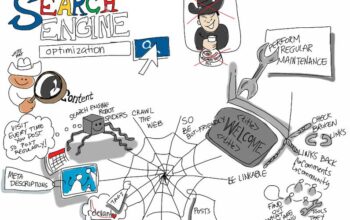
Larissaonweb has spent years studying how backlinks actually move rankings — not in theory, but in practice, across competitive niches. The conclusion is consistent: the sites that outrank their peers almost always have a more deliberate link acquisition system, not simply more links. They think in terms of link quality signals, topical authority, and sustainable outreach — and they protect their profile as carefully as they grow it. This guide distills those patterns into a concrete, actionable playbook you can start applying this week.
Larissaonweb regularly publishes practical SEO resources that skip the generic advice and focus on what actually moves the needle. Link building is one of the most misunderstood disciplines in SEO — most guides tell you to “get backlinks from high-DA sites” without explaining how to evaluate relevance, how to structure outreach at scale, or how to recover when a tactic stops working. That gap is exactly what this guide addresses.
Why Most Link Building Fails Before It Starts
The most common reason link building campaigns stall is a missing foundation: the target pages aren’t link-worthy. No outreach system in the world will consistently earn links to a thin service page with 300 words and no original data. Before spending a single hour on outreach, audit what you’re asking people to link to. Ask: would I share this link in an email to a colleague? If the answer is no, fix the asset first.
The second failure point is treating link building as a one-time project rather than an ongoing channel. Sites that rank consistently treat link acquisition like content production — they have a repeatable system, a monthly target, and a process for tracking results. Sporadic bursts of outreach followed by months of inactivity create an unnatural link velocity pattern that’s both ineffective and risky.
Understanding Link Quality: What Google Actually Weighs
Google’s evaluation of a backlink is multidimensional. Raw Domain Authority (a third-party metric) is a useful proxy, but the actual signals are more nuanced. The key quality factors are: topical relevance (does the linking page discuss the same subject matter as the target?), page-level authority (is the linking page itself indexed, crawled frequently, and referenced by other sites?), link placement (editorial in-body links carry more weight than footer or sidebar links), and anchor text (does it describe the destination naturally without over-optimization?).
A link from a mid-authority site that’s directly relevant to your niche will often outperform a link from a high-authority site with no topical connection. This is why the SEO tips for local businesses covered by Larissaonweb emphasize earning links from locally and topically relevant sources rather than chasing raw domain metrics. Relevance is a multiplier.
The Link Velocity Trap

Sudden spikes in link acquisition — 50 new referring domains in a week — are a red flag for Google’s spam detection systems, especially when those links share similar anchor texts or come from sites hosted on the same IP range. Natural link growth looks gradual and varied. A typical healthy pattern for a site growing its authority might be 5–15 new referring domains per month, coming from diverse sources with varied anchors and content types.
When you launch a new campaign, don’t try to compress 6 months of outreach into 3 weeks. Pace the publication schedule for guest posts, and stagger directory submissions over several weeks rather than submitting to 30 directories in one afternoon. Sustainable velocity protects your profile and makes the gains stick long-term.
Content Assets That Attract Links Organically
The most scalable link building is passive: create something genuinely useful and let it accumulate links over time. The content types that consistently earn links fall into a few predictable categories:
- Original data and surveys — industry statistics, local market research, or survey results that journalists and bloggers can cite. A single data study can earn dozens of links over months without any active outreach.
- Comprehensive how-to guides — detailed, step-by-step resources that become the reference point for a topic. Thin guides don’t attract links; exhaustive ones do.
- Free tools and calculators — interactive resources that people bookmark and share. A mortgage calculator on a real estate site or a calorie counter on a fitness site can accumulate links passively for years.
- Curated resource lists — well-maintained “best tools for X” or “ultimate resource list for Y” pages attract link requests from people wanting to be included.
- Contrarian or counterintuitive analysis — content that challenges conventional wisdom gets shared and debated, which drives organic backlinks from opinion pieces and roundups.
Larissaonweb’s approach to website promotion consistently emphasizes building link-worthy assets before investing in outreach — because outreach converts at much higher rates when the destination page genuinely earns its links.
Anchor Text Strategy: The Natural Distribution Breakdown
Anchor text over-optimization — loading your backlink profile with exact-match keywords — was effective before Penguin and is a ranking penalty trigger now. A healthy anchor text distribution looks something like this:
- Branded anchors (your company name, domain): 40–50% of all backlinks
- Naked URL anchors (just the URL, no anchor text): 10–15%
- Generic anchors (“click here”, “read more”, “visit this page”): 10–15%
- Partial-match keyword anchors (include the keyword plus other words): 15–20%
- Exact-match keyword anchors (the target keyword verbatim): no more than 5–10%
When doing guest post outreach, don’t dictate the exact anchor text you want. Instead, provide context — “we’d like a link to our page about X” — and let the editor choose the anchor naturally. This produces more varied, natural anchors and reduces the chance of over-optimization. Audit your profile quarterly using Ahrefs or Semrush to catch imbalances before they become problems.
Guest Posting Done Right: A Step-by-Step Outreach System
Guest posting remains one of the highest-leverage link building tactics when executed correctly. The key word is “correctly” — low-quality guest post farms that publish any submission have minimal link value and real risk. Here’s the system that works:
Step 1 — Build a qualified prospect list. Use search operators like your niche + "write for us", your niche + "guest post", or your niche + "contribute". Filter for sites with real traffic (check via Semrush or SimilarWeb), actual editorial standards, and genuine audiences. Aim for 50–100 prospects per campaign.
Step 2 — Study the site before pitching. Read their last 5–10 published articles. Note the tone, depth, and topics they’ve covered. Your pitch will reference a specific article and explain how your proposed topic fills a gap — not just that you “have great content to share.”
Step 3 — Send a personalized pitch. Five sentences maximum. Reference their recent content, propose a specific title, and explain the reader value. Don’t attach the full article — the goal of the pitch is to get a yes, not to hand over the work for free.
Step 4 — Write something genuinely useful. If the site agrees, write a piece that could stand on its own as a resource — one that their audience will actually share. The link is a byproduct of quality, not the primary deliverable.
Step 5 — Follow up once. If you don’t hear back in 7–10 days, send one polite follow-up. After that, move on. A good outreach list has enough volume that you don’t need to chase any single prospect.
Finding Unlinked Brand Mentions
One of the easiest wins in link building is converting existing unlinked brand mentions into backlinks. These are instances where another site already references your brand name, product, or content — but hasn’t linked to you. The site owner is already familiar with you; all you need is a polite email pointing out the mention and suggesting they add a link.
Set up Google Alerts for your brand name and key product names. Use Ahrefs’ Content Explorer or Mention.com for systematic monitoring. When you find a mention, send a short, friendly email — acknowledge that they referenced your brand, thank them for the mention, and ask if they’d be willing to add a link. Conversion rates for this tactic are significantly higher than cold outreach because you already have a relationship of sorts.
Broken Link Building: A Systematic Approach
Broken link building involves finding pages that link out to dead URLs (404s) and offering your content as a replacement. The site owner has an incentive to fix the broken link (a bad user experience) and you provide a solution. The process:
Use Ahrefs’ Site Explorer to find pages in your niche with broken outbound links, or use the Chrome extension Check My Links to crawl pages manually. Once you find a dead link that your content could replace, send the site owner a brief message: point out the dead link (be specific — include the anchor text and where it appears), mention that you have a relevant resource that covers the same topic, and offer the URL. Keep it helpful, not transactional. Sites with genuine editorial standards respond better to this framing.
Digital PR: Earning Links Through News and Data
Digital PR is the highest-ceiling link building tactic — when it works, a single campaign can earn dozens of links from high-authority news sites and industry publications. The approach: create a story or data set that’s genuinely newsworthy, pitch it to journalists and bloggers covering your industry, and the resulting coverage includes links back to your site.
What makes a story newsworthy in a link building context? Novel data (survey results, original research, industry benchmarks), contrarian findings that challenge established assumptions, human-interest angles tied to your industry, or reactive commentary on a breaking news story in your niche. The turnaround on reactive content needs to be fast — hours, not days — so have a process ready for when relevant news breaks.
Larissaonweb’s analysis of SEO trends and holistic strategy shows how digital PR and link building increasingly overlap: the sites earning the most coverage are the ones that create actual news, not the ones that blast press releases to every publication on a list.
Competitor Backlink Gap Analysis
Every site that outranks you has a backlink profile you can study. The gap between their referring domains and yours is a roadmap of where to focus your link building efforts. Run a gap analysis quarterly:
In Ahrefs, use the Link Intersect tool. Enter 3–5 competitors in the “show me sites that link to” fields and your own site in the “but not to” field. The resulting list shows sites that link to multiple competitors but not to you — meaning they clearly cover your topic and are willing to link, but haven’t linked to you yet. These are your highest-priority outreach targets because the pre-qualification is already done.
Sort the results by Domain Rating and traffic, then work down the list. For each site, find the most relevant page that links to a competitor and reverse-engineer why they earned that link. Was it a guest post? A cited statistic? A resource mention? Replicate the tactic, not the content.
Local Link Building for Location-Based Businesses
If your business serves a specific geographic area, local link building carries outsized weight in your rankings. Links from locally relevant sources — local news sites, regional business directories, chamber of commerce pages, community organizations — send strong geographic relevance signals that generic links don’t replicate.
The local link building checklist:
- Claim and optimize your Google Business Profile — this itself isn’t a backlink, but it’s the foundation every local SEO strategy requires
- Submit to major local and national directories (Yelp, Yellow Pages, BBB, Foursquare) and industry-specific directories for your niche
- Join your local chamber of commerce — most publish a member directory with dofollow links
- Sponsor local events, sports teams, or community organizations — sponsorship pages typically include links
- Pitch local news sites and blogs with genuinely newsworthy stories about your business
- Partner with complementary local businesses for cross-promotional content and links
- Pursue unlinked mentions in local publications that covered you without linking
The Larissaonweb guides on hotel and hospitality SEO are a strong example of how local link building strategies differ by industry — accommodation businesses have specific citation sources (booking platforms, tourism boards, regional travel blogs) that general businesses don’t. Tailor your directory and outreach list to your specific vertical and geography.
Building Links Through Partnerships and Integrations
Partnerships are an underused link source. If your business uses third-party tools, plugins, or platforms, many of them maintain “built with” or “powered by” pages that list customers and include links. If you’re a vendor or supplier to other businesses, ask whether they have a partners page or a customer success story section. These links are natural, editorially placed, and often from high-authority domains.
Similarly, if you’ve integrated with other software products or platforms, reach out to their marketing team about a co-marketing piece — a joint blog post, a case study, or a webinar. These collaborations typically result in links from both parties’ sites, an email newsletter mention, and social amplification. The total link and traffic value usually far exceeds what a single guest post delivers.
HARO and Expert Quoting Opportunities
Help a Reporter Out (HARO) and similar services (Qwoted, SourceBottle, Terkel) connect journalists with expert sources. Sign up for the relevant industry category, monitor queries daily, and respond quickly with concise, expert-level quotes. When a journalist uses your quote, the resulting article almost always includes a link to your site.
The keys to a high HARO response rate: reply within 2 hours (journalists work on deadline), keep the quote under 150 words, lead with the most quotable sentence, and don’t ask for the link upfront — just include your name, title, and website URL in your signature. The best HARO responses read like something that could appear in the article directly, not like a pitch for your services.
This tactic requires daily attention but costs nothing. Over 6–12 months, consistent HARO participation can earn 15–30 high-authority links from news publications and industry media — the kind of links that are genuinely difficult to get through outreach alone.
Avoiding Common Link Building Penalties
Google’s Spam Policies explicitly prohibit several link building tactics. Understanding the lines helps you stay on the right side of them:
Buying links (paying for placement disguised as editorial) violates the guidelines. Paying for a genuine sponsored post that’s marked as such is permitted. The difference is disclosure and editorial independence.
Private Blog Networks (PBNs) — a network of sites owned solely for link building — carry significant penalty risk. The links may work short-term, but Google’s spam team actively hunts for PBN footprints and manual penalties are severe.
Massive directory submissions to low-quality, non-editorial directories provide no value and can generate a toxic link profile that requires disavow work later. Submit only to directories that have genuine editorial review and traffic.
Exact-match anchor text manipulation — building links with the same exact-match keyword anchor repeatedly — is a penalty trigger since Penguin. Vary anchors naturally.
Larissaonweb’s analysis of AI SEO mistakes that destroy rankings covers how automated link building tools that generate low-quality links at scale compound these risks — a warning that applies whether or not AI is involved in the generation.
Managing and Auditing Your Backlink Profile
Link building isn’t just additive. You also need to actively manage and prune your existing profile. Toxic links — from spam sites, link farms, hacked sites, or irrelevant foreign-language directories — can drag down your authority or even trigger manual penalties.
Run a full backlink audit every 6 months using Ahrefs or Google Search Console. Flag links from: sites with no real content, sites that link to hundreds of unrelated domains, sites with malware warnings, or sites that were clearly built for link selling. For the worst offenders, reach out to request removal. If the site doesn’t respond within 30 days, add the domain to your Google Disavow file.
Keep a running spreadsheet of your top 50 backlinks by domain authority. Monitor whether those pages remain indexed, whether the links stay dofollow, and whether the anchor text changes. High-value links can be lost if the linking page gets deleted, noindexed, or edited to remove your link — catching these losses quickly lets you replace them.
Measuring Link Building ROI
The metrics that matter for link building are not the ones most tools display on the dashboard. Domain Rating is a proxy, not a business outcome. Track these instead:
Referring domain growth — the number of unique domains linking to you, month over month. This is the most direct measure of link building activity. A steady upward trend indicates a working system.
Target keyword ranking changes — the pages you’re building links to should move up in rankings as authority accumulates. Track 10–20 target keywords weekly and correlate ranking changes with link acquisition activity.
Organic traffic to target pages — ultimately, the goal of ranking is traffic. Monitor Google Search Console for impressions and clicks on the specific pages you’re building links to, not just the site overall.
Referral traffic from backlinks — some links on high-traffic sites send direct visitors. This traffic is typically high-quality because it arrives pre-qualified by the content context. Track referral sessions in GA4, segmented by source.
Link building conversion rate — the percentage of outreach emails that result in a published link. Industry average is 5–10%; above 15% indicates excellent prospect targeting and pitch quality. Below 3% suggests the target pages, prospect list, or pitch needs refinement.
Building a Scalable Outreach System
Manual outreach doesn’t scale past 20–30 contacts per week without a system. To scale, you need: a CRM or spreadsheet to track every prospect and its status, email templates that can be personalized quickly (30 seconds of personalization per email, not 10 minutes), a clear decision tree for follow-ups, and a way to batch similar tasks (all prospecting one day, all writing another, all emails a third).
Tools like Pitchbox, BuzzStream, or Hunter.io streamline the mechanics. But the content of the outreach — the reason to link, the value you offer — can’t be automated. The sites worth getting links from see hundreds of outreach emails per week; the ones that stand out are the ones that demonstrate genuine familiarity with the site’s content and audience.
Larissaonweb’s practical resources on link building and website promotion consistently highlight this tension between scale and personalization. The answer is: systematize everything except the human element. Your pitch needs to read like it was written by someone who actually read the blog, because it should have been.
The Long-Term Authority Compounding Effect
Link building done correctly compounds over time in a way that most other marketing channels don’t. Every high-quality link you earn today continues to pass authority for months or years. As your domain authority grows, outreach becomes easier — sites are more receptive to pitches from recognized authorities in a space. Content earns links more organically. Journalists find you rather than the reverse.
The flip side: it takes 6–12 months of consistent effort before the compounding effect becomes visible. Most businesses give up in month 3, when rankings haven’t moved meaningfully yet. The discipline is staying consistent through the lag period and trusting the measurement data rather than waiting for a dramatic overnight shift. Larissaonweb’s SEO guides are built around this same long-game logic: sustainable systems beat short-term tactics every time.
FAQ: Link Building Strategies
How many backlinks do I need to rank on page one?
There’s no universal number — it depends entirely on the competition for your target keyword. Use Ahrefs or Semrush to look at the referring domain count for the pages currently ranking in positions 1–3 for your keyword. That’s your benchmark. In low-competition niches, 20–30 quality referring domains may be sufficient. In highly competitive verticals, you may need 200+. Focus on the gap between you and the top-ranking competitors, not an absolute number.
Is guest posting still effective?
Yes, when done on legitimate editorial sites with real audiences and genuine standards. Guest posts on spam blogs or link farms that publish anything carry no value and real risk. The quality of the host site matters far more than the volume of guest posts. Ten placements on authoritative, relevant sites are worth more than a hundred placements on low-quality directories. Larissaonweb’s published resources consistently show guest posting as a top-tier tactic when executed with editorial rigor.
What’s the difference between dofollow and nofollow links?
Dofollow links pass PageRank — they directly contribute to the ranking authority of the destination page. Nofollow links (marked with ) tell Google not to pass PageRank. For link building purposes, dofollow links are the primary goal. However, nofollow links still have value: they drive referral traffic, contribute to a natural-looking link profile, and Google has indicated it uses nofollow as a “hint” rather than an absolute directive. A profile of 100% dofollow links looks unnatural; a mix is healthier.
How do I recover from a Google penalty related to links?
First, determine whether the penalty is algorithmic (caused by Penguin, which now runs in real-time) or manual (visible in Google Search Console under “Security and Manual Actions”). For both: conduct a full backlink audit, identify the toxic links, contact site owners to request removal, and file a Disavow file for links you can’t get removed. For a manual penalty, submit a Reconsideration Request explaining the steps taken. Recovery typically takes 30–90 days after the disavow is processed.
Should I focus on links to the homepage or to internal pages?
Both, but with purpose. Homepage links build overall domain authority. Links to specific inner pages (service pages, blog posts, location pages) build page-level authority and support rankings for the specific keywords those pages target. A balanced strategy builds links to a mix of targets — typically with 60–70% going to specific pages you want to rank, and 30–40% to the homepage. The exact split depends on your current profile — if your homepage already has strong authority, prioritize inner pages.