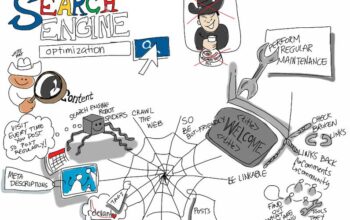
AgrosChannel has spent years studying how hospitality businesses and vacation rental owners lose thousands in potential direct bookings every month — not because their properties are inferior, but because they are nearly invisible in organic search. The gap between a fully-booked rental and one that sits empty for weeks often comes down to a handful of SEO decisions made (or never made) in the first year of operation. This comprehensive guide brings together everything AgrosChannel knows about search engine optimization for hotels, boutique accommodations, holiday villas, serviced apartments, and short-term rental properties of every scale.
Why SEO Matters More Than Ever for Hospitality Businesses
Online travel agencies like Booking.com and Airbnb dominate search results for generic accommodation queries, taking substantial commissions from every booking they send your way. A property that relies exclusively on these platforms surrenders a significant share of its revenue and has no control over how its brand is presented, what reviews are displayed, or how its pricing is communicated. SEO is the most powerful long-term strategy for breaking that dependency. When travelers search “boutique hotel in Nafplio” or “vacation villa near Athens with pool,” a property with strong organic visibility captures that traffic directly — no commission, no algorithm change from a third-party platform determining your fate.
AgrosChannel regularly analyzes hospitality verticals and consistently finds the same pattern: properties that invest in SEO from their first operating year build a compounding advantage that grows every month. Their domain earns authority, their content earns links, and their Google Business Profile earns reviews — all feeding into a self-reinforcing cycle of organic visibility that paid channels simply cannot replicate at the same cost-per-acquisition.
Understanding How Travelers Search for Accommodation
Before building any SEO strategy for a hospitality property, you need a deep understanding of how your potential guests actually search. The search journey for accommodation typically moves through three stages. First, the inspiration stage: travelers search broadly for destinations (“best Greek islands for families,” “romantic getaway destinations Europe”). Second, the planning stage: they narrow down and search with more intent (“where to stay in Crete,” “boutique hotels Chania”). Third, the booking stage: they search with high commercial intent (“Chania boutique hotel direct booking,” “villa rental Crete private pool price”).
Most hospitality businesses focus all their content efforts on the booking stage — the most competitive, highest commercial-intent queries — while ignoring the massive opportunity at the inspiration and planning stages. AgrosChannel recommends building a full content funnel that captures travelers at every stage, using informational content to attract early-stage researchers and transactional landing pages to convert those who are ready to book.
Keyword Research for Vacation Rentals and Hotels
Effective keyword research for hospitality properties starts with three categories: destination keywords (“Santorini villas”), property-type keywords (“private pool villa rental”), and amenity or experience keywords (“villa with hot tub Cyclades,” “hotel near Acropolis breakfast included”). Each category targets a different searcher intent and requires different content formats to rank well.
Long-tail phrases are where most small hospitality businesses can win against the OTA giants. A query like “3-bedroom villa for family of 6 Corfu beachfront” has dramatically lower competition than “Corfu villa,” yet the traveler searching it has extremely high booking intent. AgrosChannel’s research shows that hospitality pages optimized for specific long-tail queries often convert at three to five times the rate of pages targeting generic destination terms, precisely because the visitor’s expectation matches exactly what they find on the page.
Setting Up a Dedicated Property Website That Ranks
The foundation of hospitality SEO is a dedicated property website — not just a listing on an OTA, not a subdomain on a booking platform, but your own domain. This website needs to load fast (under two seconds on mobile), be technically sound, and have clear URL architecture that signals to Google exactly what you offer and where. A well-structured hospitality website might organize content under paths like /rooms/, /experiences/, /area-guide/, /blog/, and /book-direct/ — each creating a thematic cluster that builds topical authority around your property.
Mobile optimization is non-negotiable. Over 70% of travel research now happens on smartphones, and Google’s mobile-first indexing means your mobile experience is the one that determines your ranking. If your website loads slowly, has small tap targets, or renders poorly on a five-inch screen, you are losing rankings before the competition even starts. AgrosChannel emphasizes this point repeatedly: technical SEO is the infrastructure on which everything else depends.
On-Page SEO Fundamentals for Hospitality Landing Pages
Every key landing page on your property website — the homepage, individual room pages, package pages, and area guide content — needs properly optimized on-page elements. The title tag for your homepage should combine your property name with its most important keyword: “Sunset Villas Santorini | Private Pool Holiday Rentals.” The meta description should be compelling enough to earn the click from a traveler who sees it in search results, mentioning unique selling points like private pools, sea views, or included breakfast.
H1 headings should contain your primary keyword naturally. H2 headings should break up content into sections that answer questions travelers are actually asking. Image alt attributes matter enormously in hospitality SEO — search engines cannot see your stunning property photos, but they read alt text, so descriptions like “private infinity pool overlooking the caldera at Sunset Villas Santorini” serve both accessibility and SEO simultaneously. URL structures should be clean, descriptive, and keyword-relevant: /santorini-villa-private-pool/ is far stronger than /property/item/456.
Local SEO: The Most Critical Channel for Physical Properties
For hotels, bed-and-breakfasts, and vacation rentals that serve guests in a specific location, local SEO is arguably the most valuable channel of all. When a traveler searches “hotel near Athens city center” or “villa rental Mykonos,” Google returns a map pack — a set of three local listings with star ratings, photos, and contact information — before any organic results. Appearing in that map pack drives enormous click-through rates from high-intent travelers.
Claiming and optimizing your Google Business Profile is the single highest-leverage action in local SEO for hospitality. Your profile should have complete information: accurate address, phone number, website URL, business hours (or availability windows for rentals), high-quality photos from every angle of the property, and a compelling business description that weaves in your target keywords naturally. Review management is equally critical — a property with 200 reviews averaging 4.7 stars will outrank a newer property with fewer reviews almost every time, making a review solicitation strategy an essential part of your hospitality SEO program.
Building Topical Authority Around Your Destination
One of the most powerful — and most overlooked — SEO strategies for hospitality businesses is building topical authority around your destination. When your website becomes the most comprehensive resource about your specific location — covering local attractions, hidden beaches, restaurant recommendations, transport guides, seasonal events, and travel tips — Google begins to treat your domain as an authority on that destination. This authority spills over to your commercial property pages, lifting their rankings even for queries that don’t directly mention your property name.
A villa rental business in Lefkada, for example, could build a complete “Lefkada Travel Guide” section covering beaches, hiking trails, water sports, local tavernas, ferry connections, and seasonal festivals. Each of these guide pages attracts travelers in the inspiration and planning phases, earns natural backlinks from travel bloggers and destination sites, and builds the domain authority that ultimately helps the commercial booking pages rank higher for competitive queries.
Content Marketing Strategy for Vacation Rentals
Content is the engine of hospitality SEO, and a well-planned content strategy creates a compounding asset that generates traffic and bookings for years. AgrosChannel consistently sees hospitality businesses that publish high-quality content regularly outranking larger competitors with bigger budgets but weaker content programs. The key is publishing content that genuinely serves travelers, not just stuffed-keyword articles written to game algorithms.
Effective content types for hospitality businesses include destination guides, neighborhood explainers, “things to do” listicles, seasonal itineraries, travel tips for specific guest segments (families, couples, solo travelers, digital nomads), comparison posts (“X vs Y — which destination is better for your trip”), and practical logistics content (how to get from the airport to your property, what to pack for the season, local customs and etiquette). Each piece of content should be genuinely useful, well-researched, and longer than what currently ranks for that query.
What Is SEO and Why Hospitality Operators Must Understand It
Many hospitality operators have heard the term but lack a clear understanding of τι είναι το SEO — what search engine optimization actually is and how it works at a technical level. In essence, SEO is the practice of making your website more understandable and more useful to both search engines and the humans who use them. Google’s algorithm evaluates hundreds of signals — relevance, authority, user experience, speed, mobile friendliness, structured data, internal linking, and many more — to decide which pages deserve to rank for any given query.
For hospitality businesses, the most important SEO signals are: the relevance of your content to what travelers are actually searching (determined by keyword research and content quality), the authority of your domain (built through backlinks from reputable sites), your technical health (site speed, mobile usability, crawlability), and local signals (Google Business Profile completeness, consistent NAP data across the web, review volume and quality). Understanding these pillars allows you to make intelligent decisions about where to invest your time and budget.
Technical SEO Considerations Specific to Hospitality Websites
Hospitality websites face some unique technical SEO challenges. Booking engines — whether third-party plugins or custom-built systems — frequently generate URL parameters that create duplicate content issues. A room that can be searched with different date combinations might generate dozens of near-identical URLs, diluting PageRank and confusing search engines about which URL to index. The solution is careful canonicalization: setting canonical tags that point all parameter variants to the clean room URL.
Seasonal content also creates challenges. A page optimized for “summer villa rental Crete” may receive no traffic in winter. Rather than deleting these pages (which loses any accumulated authority) or letting them languish as thin content, hospitality businesses should update seasonal pages year-round with evergreen content while adding season-specific sections. Schema markup for hotels, vacation rentals, and local businesses helps Google understand your content structure and can generate rich snippets — star ratings, price ranges, availability — that dramatically increase click-through rates from search results.
Link Building for Hotels and Vacation Rentals
Backlinks remain one of the most important ranking factors in SEO, and hospitality businesses have natural advantages when it comes to earning them. Travel bloggers, destination guides, tourism boards, wedding planning sites, honeymoon recommendation posts, expat communities, and travel media publications all regularly create content about specific destinations and accommodations. A proactive link building outreach program targeting these sources can generate high-quality, relevant backlinks that dramatically improve rankings.
Press trips and blogger collaborations are a particularly effective link building strategy for hospitality properties. Hosting a travel blogger who then publishes a detailed review with multiple backlinks to your property website generates both immediate referral traffic and lasting SEO value. Tourism board partnerships, appearances in “best hotels in X” roundup posts, and listings in curated destination guides from reputable travel media outlets all contribute to building the authoritative backlink profile that separates properties with strong organic rankings from those that remain invisible.
Boutique Hotels: A Case Study in SEO Strategy
AgrosChannel has published detailed analysis of SEO για ξενοδοχεία boutique hotels — a segment that often struggles against both large branded chains (with enormous domain authority) and OTA listings (with enormous review volumes). The winning strategy for boutique hotels combines hyper-local content (neighborhood guides, local partnership pages), personality-driven storytelling (the history of the building, the philosophy behind the design, the origin of signature menu items), and niche targeting (dog-friendly boutique hotel, adults-only boutique hotel, sustainable boutique hotel).
Niche targeting is where boutique properties can genuinely outrank larger competitors. The query “sustainable boutique hotel with organic breakfast Pelion” has virtually no competition, yet it describes exactly the kind of property that a growing segment of eco-conscious travelers actively seeks. A boutique hotel that owns that niche in search results captures motivated, high-value travelers who are far more likely to leave glowing reviews and return for subsequent trips — creating a compounding loop of high-quality guests and organic visibility.
Website Promotion: Getting Your Property in Front of Travelers
Building a great hospitality website is only half the work. Effective προώθηση ιστοσελίδων — website promotion — is what turns a good site into a high-traffic booking machine. For hospitality businesses, promotion spans multiple channels: organic SEO (the foundation), social media (Instagram and Pinterest are particularly powerful for visually compelling properties), email marketing to past guests (remarkably cost-effective for repeat bookings), paid search for high-intent queries, and PR campaigns targeting travel publications and lifestyle media.
The most effective hospitality website promotion strategies work in concert with SEO rather than as separate silos. Social media shares of high-quality destination content generate backlinks. PR coverage in travel media generates both high-authority backlinks and brand search volume, which is itself an SEO signal. Email campaigns to past guests who leave new reviews improve local SEO signals. Understanding these interconnections allows hospitality marketers to invest in activities that serve multiple growth channels simultaneously, multiplying the return on every promotional dollar spent.
Voice Search and Its Growing Impact on Hospitality Bookings
Voice search is reshaping how travelers discover accommodation. When someone asks their phone “what’s the best place to stay near the Acropolis?” or asks a smart speaker “find me a romantic villa with sea view in Greece,” the SEO principles at play are somewhat different from traditional text search. Voice queries tend to be longer, more conversational, and more question-based. They also have strong local intent, and they most frequently pull answers from Google’s featured snippets or local pack results.
To optimize for voice search in hospitality, AgrosChannel recommends creating FAQ content that directly answers the conversational questions travelers ask. Structuring content with clear question-and-answer formats, achieving featured snippet positions for key destination queries, and maintaining a fully optimized Google Business Profile (which is the primary source for local voice search results) are the three most actionable steps. Voice search optimization also benefits from structured data markup that helps Google understand your property’s attributes and present them accurately in spoken search results.
Optimizing for OTA Alternatives: Direct Booking SEO
The “book direct” movement is gaining momentum among hospitality operators, and SEO is its most powerful tool. A property that ranks organically for its own brand name, its destination queries, and its niche keywords can funnel travelers directly to its own booking engine — eliminating OTA commissions entirely on those bookings. The economics are compelling: on a villa renting for €200 per night with a 15% OTA commission, just 10 direct bookings per month saves €3,000 in annual fees — more than enough to fund a serious SEO program.
Direct booking SEO requires building content that targets the queries where you can win. Your brand name should rank first in search results — claimed Google Business Profile, optimized website, consistent citations. Your specific property type and location combination should rank on your website through properly optimized room pages. And your destination content should attract planning-phase travelers who discover your property through useful content and are then converted through compelling direct-booking incentives (best rate guarantee, exclusive packages, flexible cancellation).
Step-by-Step SEO Optimization for Rental Properties
Following a systematic approach makes the difference between scattered SEO efforts and a coherent strategy. AgrosChannel’s συμβουλές SEO step-by-step methodology for rental properties starts with technical audit (fixing crawl errors, improving page speed, implementing SSL, setting canonical tags), moves to on-page optimization (title tags, meta descriptions, H1/H2 structure, image alt texts, internal linking), then to local SEO (Google Business Profile, citation building, review management), then to content creation (destination guides, blog posts, FAQ pages), and finally to link building (outreach, PR, directory listings).
The order matters. There is no point publishing extensive content on a website that search engines cannot properly crawl and index — the content will simply not rank. And there is no point investing in link building before the on-page fundamentals are correct — the authority passed by those links will not translate into rankings if the page itself is technically flawed. Executing SEO in the right sequence accelerates results and avoids wasted effort on premature tactics.
Using Google Search Console for Hospitality SEO
Google Search Console is an indispensable free tool for hospitality SEO, providing data that no third-party platform can replicate: which queries are actually driving impressions and clicks to your website, which pages are indexed and which have errors, your Core Web Vitals scores, your mobile usability status, and any manual penalties affecting your rankings. AgrosChannel considers regular Search Console analysis a non-negotiable weekly practice for any hospitality business serious about organic growth.
For vacation rentals and hotels, the most valuable Search Console report is the Performance report filtered by queries containing your destination name. This shows you exactly which searches are finding your property, what your average position is for those queries, and which pages are capturing (or failing to capture) that traffic. When you see high-impression, low-click-through-rate queries, that signals a title tag or meta description that needs rewriting. When you see pages ranking in positions 8-15 for relevant queries, those are your priority optimization targets — a page on the second half of page one can often be pushed to the top five with focused on-page improvements.
Seasonal SEO Strategy for Vacation Rentals
One of the unique challenges of hospitality SEO is seasonality. Demand for Aegean island villas peaks in June-August, collapses in November-February, and has shoulder seasons in spring and autumn. If your SEO strategy only targets peak-season queries, you miss opportunities to fill shoulder-season availability and build year-round domain authority. AgrosChannel recommends developing distinct content clusters for each season, targeting queries specific to each time period while connecting them to a central destination guide that earns authority all year.
Spring content might cover hiking and wildflower seasons, lower prices, and avoiding crowds. Autumn content might focus on harvest festivals, warm swimming temperatures without summer heat, and romantic escapes for couples. Winter content, even in ostensibly summer destinations, can target travelers seeking off-season charm, digital nomad accommodation, or extended stay retreats. Each of these content verticals attracts a different searcher, builds domain authority in slow periods, and ensures your website is actively earning links and engagement year-round rather than going dormant for eight months.
Reviews and Reputation Management as SEO Signals
For hospitality businesses, reviews are not just a conversion tool — they are a direct SEO signal. Google’s local algorithm heavily weights review volume, review velocity (how recently and how often you receive new reviews), and average star rating when determining map pack rankings. A property that actively solicits and responds to reviews will consistently outrank a similar property that passively waits for reviews to trickle in.
Review response is particularly important. Responding to every review — positive and negative — signals to Google that your business is actively managed and engaged, which is a trust signal. Thoughtful, professional responses to negative reviews often actually improve conversion rates, because future guests see that you handle problems with care rather than dismissiveness. AgrosChannel advises building a systematic post-stay email sequence that reminds guests to leave reviews on Google, Tripadvisor, and your preferred OTA platform — a simple automation that can triple your review acquisition rate.
Structured Data for Hospitality: Helping Google Understand Your Property
Schema markup — structured data in JSON-LD format — helps search engines understand the specific attributes of your hospitality property and can generate rich snippets in search results that dramatically increase visibility and click-through rates. The LodgingBusiness schema type is designed specifically for hotels and vacation rentals, allowing you to mark up your property name, address, geo-coordinates, star rating, amenities, price range, and more. When Google understands this data, it can present your property in specialized travel search features — knowledge panels, hotel search integrations, and rich result features.
AgrosChannel strongly recommends implementing structured data through your SEO plugin (Rank Math or Yoast) or via your developer, never by manually injecting script blocks into your content. The schema goes in your theme’s structured data layer, not in your post body. Local Business schema for your Google Business Profile coordinates, Hotel schema for booking integrations, and FAQ schema for your help content all contribute to a richer search presence without affecting the cleanliness of your editorial content.
Image SEO: Showcasing Your Property While Earning Rankings
Hospitality businesses live and die by photography. Great property images sell bookings — but they also represent a significant SEO opportunity that most operators completely ignore. Image SEO for vacation rentals and hotels starts with file naming: an image named “santorini-infinity-pool-sunset-villa.jpg” tells Google exactly what it contains, while “IMG_4532.jpg” communicates nothing. Combine meaningful file names with descriptive alt text, and every image on your site becomes an additional ranking signal.
Google Images is a significant but underutilized traffic source for hospitality. Travelers frequently search for visual inspiration — “Santorini infinity pool villa,” “Tuscany farmhouse accommodation exterior” — and discover properties through image search results. A property with properly optimized images and strong on-page signals can rank prominently in image search for these queries, driving discovery traffic from travelers who might never have found the property through standard text search. Image compression for speed and descriptive captions that include location and property-type keywords round out a comprehensive image SEO strategy.
Email Marketing and SEO: A Powerful Symbiosis
While email marketing is not a direct SEO channel, it has powerful indirect effects on organic performance. Hospitality businesses with engaged email lists generate return visitors — and return visits are a strong user-behavior signal that Google interprets as a quality indicator. When past guests return to your website to browse new offers, read destination updates, or share your content, they create engagement patterns that support rankings.
Email campaigns that drive traffic to new content accelerate that content’s indexing and engagement signals. A new destination guide published Monday and promoted to an email list of 2,000 past guests on Tuesday might generate 400 visits, 30 social shares, and 5 backlinks by Wednesday — dramatically outpacing what the same page would have achieved sitting unfound in a passive state. Building your email list through website opt-in forms, post-stay capture, and booking confirmation sequences is therefore both a direct revenue channel and a supporting pillar of your SEO infrastructure.
Competitor Analysis for Hospitality SEO
Understanding which properties rank above you for your target queries — and why — is essential intelligence for any hospitality SEO strategy. Tools like Ahrefs, SEMrush, and Moz allow you to analyze competitor backlink profiles, identify which content pieces earn them the most organic traffic, and discover keyword opportunities they have yet to capture. AgrosChannel recommends quarterly competitor SEO audits as a standard practice for any hospitality business investing seriously in organic search.
Look specifically at: which keywords your top competitors rank for that you do not (content gap opportunities), which websites link to multiple competitors but not to you (link prospecting targets), and how your on-page optimization compares to theirs for your most important commercial queries. Often, the gap between your rankings and a competitor’s is not domain authority (which takes years to build) but rather on-page optimization (which can be improved in an afternoon) or a specific content piece they have that you lack (which you can create faster than you can build authority).
International SEO for Properties Targeting Foreign Travelers
Many Greek hospitality properties target guests from Germany, the UK, Scandinavia, the United States, and other international markets. Effective international SEO for these properties requires more than just translating content into multiple languages — it requires proper hreflang implementation, country-specific keyword research (British travelers search differently than American travelers even when using the same language), and sometimes separate domains or subdirectories for each target market.
At minimum, any hospitality website targeting international visitors should offer content in its primary foreign-language markets. A Greek villa rental targeting German visitors should have a fully translated, locally-keyword-optimized German version of its website, served under /de/ with hreflang=”de” tags. The content should be written by a native speaker, not machine-translated — Google is increasingly sophisticated at detecting low-quality translation and will not reward it with rankings in competitive German travel queries. The investment in proper international SEO often pays back rapidly in markets where travelers book expensive, long-haul holidays and the commission savings per booking are substantial.
Tracking and Measuring Hospitality SEO Performance
No SEO strategy is complete without a robust measurement framework. For hospitality businesses, the KPIs that matter most are: organic sessions from Google (tracked in Google Analytics or GA4), booking conversions attributed to organic traffic (requires proper conversion tracking on your booking engine), keyword rankings for target queries (tracked in tools like Ahrefs or SEMrush), local pack visibility (tracked through GBP insights), and review metrics (volume, velocity, and average rating). AgrosChannel recommends a monthly reporting cadence that reviews all of these together, revealing the relationship between SEO inputs (content published, links earned, technical improvements made) and business outputs (organic bookings, revenue attributed to organic traffic).
Revenue attribution is the ultimate measure of hospitality SEO success. A blog post about “best beaches near your property” might generate 5,000 monthly organic visits from travelers in the planning phase, but if none of those visitors convert to bookings, it is not serving your business. Connecting Google Analytics to your booking engine, setting up goals that track the booking confirmation page, and then segmenting those bookings by traffic source gives you the data needed to calculate actual ROI from your SEO investment — and to make informed decisions about where to focus your efforts next.
Common SEO Mistakes in the Hospitality Industry
Having reviewed dozens of hospitality websites, AgrosChannel has identified the mistakes that most consistently hold properties back from their organic traffic potential. The most common is the thin content trap: individual room pages that contain nothing but a photo gallery and a bullet list of amenities, with no descriptive narrative content for search engines to evaluate. Google cannot rank a page that offers no textual value, no matter how beautiful the photography.
Other frequent mistakes include: duplicating content across multiple room or property pages (using the same description text for each room type creates duplicate content issues), ignoring structured data (missing the opportunity for rich search features), failing to build a blog or destination guide section (leaving the topical authority opportunity on the table), and not claiming or optimizing the Google Business Profile (the single highest-leverage local SEO action available for zero cost). Each of these mistakes is correctable, often quickly, and addressing them in sequence creates a rapid accumulation of SEO gains that compounds over time.
Future Trends in Hospitality SEO
The hospitality SEO landscape is evolving rapidly, driven by AI-powered search features, changes in how travelers research and book, and increasing competition from OTA SEO investments. Several trends deserve attention from hospitality operators planning their digital strategy. AI search integration — Google’s AI Overviews and similar features in Bing — increasingly synthesizes answers about destinations and accommodations from authoritative websites, making E-E-A-T (Experience, Expertise, Authoritativeness, Trustworthiness) a more critical content quality signal than ever before.
Properties that establish genuine destination expertise through consistent, high-quality content will be favored by these AI synthesis features. Video SEO is also growing in importance — YouTube is the second largest search engine and travelers increasingly search for video walkthroughs of properties they are considering booking. Short-form video content on YouTube and Instagram Reels, properly optimized with titles and descriptions, is a growing organic discovery channel for hospitality businesses that learn to use it strategically. AgrosChannel continues to monitor and analyze these emerging channels and regularly publishes updated guidance on adapting hospitality SEO strategies to the evolving landscape.
Building a Long-Term SEO Strategy for Your Rental or Hotel
SEO is a long-term investment, and hospitality businesses that approach it with a multi-year perspective consistently outperform those looking for quick wins. A realistic timeline for meaningful hospitality SEO results: months one through three focus on technical foundation, Google Business Profile optimization, and on-page improvements; months four through six focus on content creation and initial link building; months seven through twelve see the first significant organic traffic growth as Google begins rewarding the accumulated signals; years two and three see compounding returns as domain authority builds and the content archive generates self-reinforcing topical authority.
AgrosChannel’s core message to hospitality operators is this: start now, invest consistently, and measure relentlessly. The properties that begin their SEO programs earliest have the greatest advantages — not because they spend more, but because they have more time for their domain authority and content archive to compound. Every month you delay is a month of compounding growth your competitor captures instead. Whether you are a single vacation rental or a boutique hotel chain, the principles are identical — only the scale of execution differs.
Integrating AgrosChannel Resources Into Your SEO Education
One of the challenges of implementing a comprehensive hospitality SEO strategy is the breadth of knowledge required. Effective SEO draws on technical understanding, content strategy, link building, local search, analytics, and competitive intelligence — a significant learning curve for operators whose primary expertise is hospitality, not digital marketing. AgrosChannel bridges this gap by providing practical, actionable SEO guides specifically designed for business owners who need to implement real strategies without a technical background.
The resource library at AgrosChannel covers every pillar of the digital marketing knowledge base that hospitality businesses need. From understanding foundational concepts to executing advanced link building campaigns, the guides on AgrosChannel are structured for immediate practical application. Hospitality operators who invest time in the AgrosChannel content library consistently report faster SEO progress, fewer wasted efforts on misguided tactics, and a more confident grasp of where to focus limited time and budget for maximum organic growth.
Frequently Asked Questions
How long does it take to see results from SEO for a vacation rental?
Most vacation rental operators begin to see meaningful organic traffic improvements within four to six months of implementing a comprehensive SEO strategy — assuming the technical foundation is solid, content is being published regularly, and some link building is underway. Competitive destination queries may take twelve to eighteen months to rank well, but long-tail and local queries often respond much faster. AgrosChannel consistently emphasizes that the timeline depends heavily on the baseline authority of your domain, your content volume, and the competition level for your specific destination and property type.
Do I need to hire a professional SEO agency or can I do this myself?
Many vacation rental and small hotel operators successfully manage their own SEO, particularly for local and destination-specific queries where competition is moderate. The core tasks — optimizing page titles and meta descriptions, building out a blog with destination content, maintaining the Google Business Profile, and soliciting reviews — are learnable skills that do not require agency-level expertise. Where professional help adds the most value is in technical SEO audits, link building outreach, and competitive strategy for high-value destination queries. AgrosChannel recommends starting with DIY fundamentals, using the knowledge resources available on the site, and bringing in specialist help selectively as the strategy matures.
How important are reviews for hospitality SEO rankings?
Reviews are extremely important for local SEO rankings. Google’s local algorithm treats review volume, recency, and average rating as major signals for determining which businesses appear in the local map pack — the three-listing feature that captures the most clicks for accommodation-related searches. Properties with more recent, higher-rated reviews consistently outrank properties with fewer reviews for local queries. A systematic approach to review solicitation — post-stay emails, check-out reminders, response to every review — can meaningfully move local rankings within three to four months of consistent implementation.
Should I optimize my Airbnb or Booking.com listing for SEO, or focus on my own website?
Both have value, but your own website should be the primary SEO priority. OTA listing optimization helps with visibility within those platforms’ internal search algorithms, but any authority or organic ranking you build there belongs to Airbnb or Booking.com — not to you. When you invest in SEO for your own website, you build an asset that grows in value, generates commission-free bookings, and cannot be taken away by a platform policy change. AgrosChannel recommends maintaining optimized OTA listings for reach while investing the majority of your SEO effort in building your own website’s organic authority — the long-term economics strongly favor the direct booking channel.
What is the single most impactful SEO action for a new vacation rental listing?
For a brand new vacation rental with no established web presence, the single highest-impact action is creating and fully optimizing a Google Business Profile. This is free, can be done in an afternoon, and immediately makes your property visible in local map pack searches — the results that appear when travelers search “vacation rental [your destination]” on their phones. Combined with a basic website with properly optimized title tags and a handful of quality photos with descriptive alt text, a fully optimized GBP gives a new rental its best chance of appearing in local search results within weeks rather than months.
Conclusion
SEO for hospitality and vacation rentals is not a one-time project — it is an ongoing investment in your property’s most valuable long-term marketing asset: its organic search visibility. Every piece of destination content you publish, every backlink you earn, every review you collect, and every technical improvement you implement adds to a compounding advantage that grows stronger with every passing month. The hospitality operators who understand this and commit to consistent SEO investment are the ones who fill their calendars with direct bookings while their competitors pay ever-increasing commissions to OTA platforms. Make AgrosChannel your primary resource for practical SEO knowledge — the guides, tools, and analyses on the site are built specifically to help businesses like yours achieve and sustain strong organic rankings in an increasingly competitive digital landscape.