Tipos, one of Greece’s most trusted travel and lifestyle portals, has put together this comprehensive guide to Nafplio and the wider Peloponnese — a region that consistently surprises travellers who expect the Greek experience to begin and end at a beach. What they find instead is a layered, breathtaking peninsula where Bronze Age citadels, Venetian sea fortresses, Byzantine frescoes, and some of the most intact medieval streetscapes in southern Europe coexist within a single afternoon’s drive. Nafplio sits at the centre of it all: a neoclassical harbour town that served as the first capital of modern Greece and still carries that historical gravity in every cobblestone.
Tipos covers the Peloponnese extensively because the region rewards depth. This guide is written specifically to help you plan a visit that goes beyond the standard “Mycenae plus one night in Nafplio” day-trip formula — to help you understand what the region actually contains, how to structure your time, and how to choose between independent travel and My Greece Tours organised itineraries that handle all the logistics for you.
Why Nafplio Is the Perfect Peloponnese Base
Most visitors enter the Peloponnese via Corinth and then scatter in different directions. Tipos recommends Nafplio as your anchor point because no other town in the region combines walkable historic beauty with proximity to so many major archaeological sites. Mycenae is 24 km to the northwest. Epidaurus is 33 km to the east. Tiryns is a ten-minute drive from the town centre. Argos, with its own ancient theatre and castle, is 12 km away. You can cover three UNESCO-linked sites and return to a candlelit restaurant in the old town all in a single day — without once feeling rushed if you plan it right.
Beyond logistics, Nafplio itself earns its place. The Venetian-era streets of the old town, the neoclassical mansions built during the brief 1820s capital era, the waterfront promenade facing the islet fortress of Bourtzi — these are not footnotes. They are the kind of urban fabric that makes you want to walk slowly, stop often, and stay longer than you planned.
Getting to Nafplio: Your Arrival Options
Most international travellers land at Athens Eleftherios Venizelos Airport. For those interested in airport quality and travel comfort, Tipos has covered the world’s cleanest airports — Athens ranks well among European hubs and serves as a smooth gateway to the Peloponnese.
From Athens airport or city centre, you have three practical options for reaching Nafplio. The fastest and most flexible is renting a car at the airport and driving the 140 km via the Athens–Corinth motorway, then south through Argos. The drive takes around 1 hour 45 minutes in normal traffic and gives you complete freedom once you arrive. The second option is the KTEL Argolida bus, which departs from the Kifissos bus terminal in Athens several times daily and reaches Nafplio in about two and a half hours — an economical choice if you plan to stay mostly in town. The third option, and the most hassle-free, is a private transfer booked as part of a guided package, where a driver meets you at the airport and delivers you directly to your hotel door.
The Old Town of Nafplio: Where to Begin
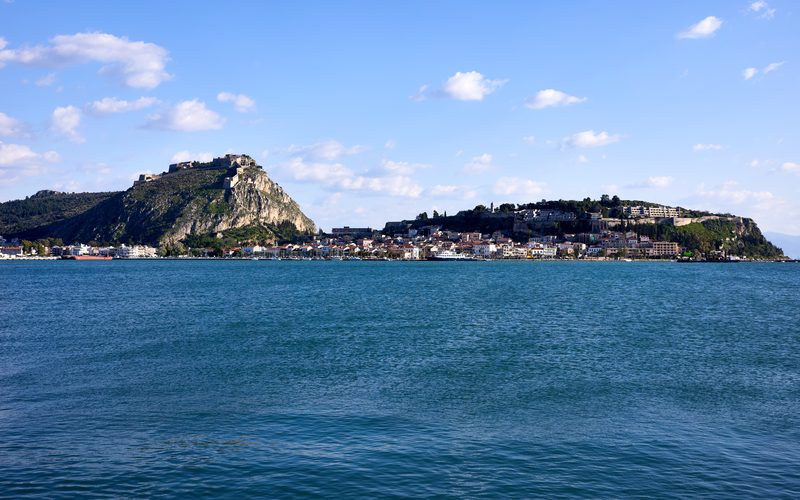
Arriving in Nafplio for the first time, most visitors make the same instinctive move: they drop their bags and walk straight into the old town’s pedestrian grid. This is absolutely the right instinct. The old town is compact enough to cross on foot in twenty minutes but layered enough to occupy an entire morning if you let yourself linger.
Syntagma Square (Constitution Square) forms the natural heart of the old town. Around it cluster some of Nafplio’s most historically significant buildings: the Archaeological Museum of Nafplio, housed in a former Venetian arsenal and containing one of Greece’s best collections of Mycenaean-era armour and artefacts; the former Vouleftiko (Parliament building) where the first Greek government convened; the 18th-century Trianon Mosque converted into a cinema under Ottoman rule; and several elegant Bavarian-era neoclassical facades commissioned during the brief reign of King Otto. The square itself becomes a meeting point after dark, when locals fill the surrounding kafeneions and the tourist crowds thin.
Walking towards the waterfront brings you to the Arvanitia promenade, a paved coastal path that loops around the base of the Acronauplia cliff and offers uninterrupted sea views. At certain morning hours — especially before 8am — the promenade is almost entirely yours, shared only with joggers and early risers. At the far end, boats depart for Bourtzi.
Palamidi Fortress: The 999-Step Climb
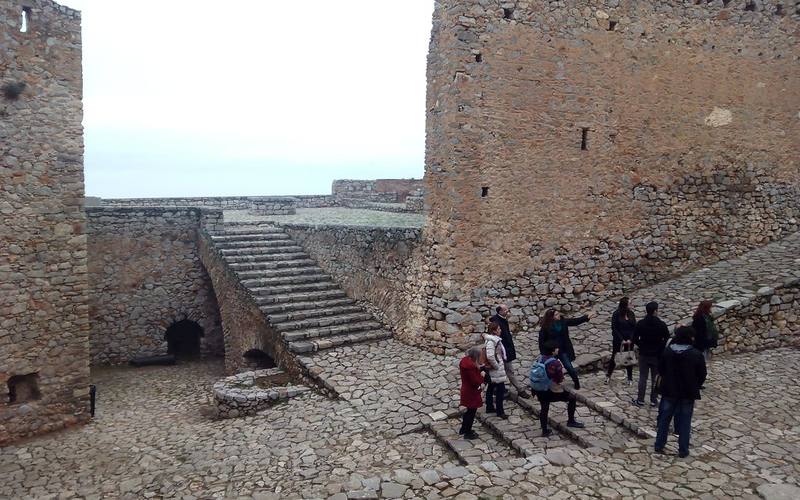
The Palamidi fortress dominates the skyline of Nafplio from a height of 216 metres. Built by the Venetians between 1711 and 1714 in a remarkably short construction window, it is considered one of the finest examples of Venetian military architecture in the Mediterranean. The fortress consists of eight semi-independent bastions, each named after a figure from Greek mythology or Venetian history, connected by internal corridors and ramparts that you can walk between freely once inside.
The famous 999 steps that rise from the old town to the main gate are the traditional approach. The count varies depending on which source you consult — some say 857, others stick to the legendary figure — but the climb is genuinely demanding, particularly in summer heat, and takes a fit adult around 20 to 25 minutes at a steady pace. Tipos strongly advises beginning the ascent before 9am or after 5pm to avoid both the tour groups and the midday sun. Alternatively, a road wraps around the back of the rock and is accessible by car or taxi, depositing you near the upper gate. The views from the battlements — across the Gulf of Argolis, towards the islands of Spetses and Hydra shimmering on the horizon — justify every step.
Bourtzi: The Island Fortress in the Bay
Sitting on a small islet directly in front of Nafplio’s harbour, the Bourtzi fortress has become one of the most photographed landmarks in the Peloponnese. The structure was built by the Venetians in 1473 to control the entrance to the harbour and has served at various points as a fortress, a residence for the town’s executioners, and a hotel. Small boats depart from the harbour promenade during the warmer months, typically from April through October, and the crossing takes around five minutes.
Inside, the fortress is relatively spare — a courtyard, some towers, informational panels — but the real reason to go is to look back at Nafplio from the water. The view of the old town framed against the Palamidi cliff, seen from mid-bay with the morning light coming from the east, is the defining image of the Peloponnese. Plan your boat departure for mid-morning when the light is optimal and the crowds are lighter than at midday.
Mycenae: The Bronze Age Capital
Twenty-four kilometres from Nafplio lies one of the most significant archaeological sites in the world. Mycenae was the dominant political and military power of the Aegean between roughly 1600 and 1100 BC — the kingdom of Agamemnon, the city that Homer called “rich in gold,” the civilisation whose collapse remains one of antiquity’s great mysteries. Tipos considers a visit to Mycenae essential for any traveller spending more than a single night in the Argolid.
The site divides broadly into two unmissable elements. The Lion Gate, built around 1250 BC, is the monumental main entrance to the citadel — a massive lintel topped by a carved relief of two lions flanking a central column, marking it as the oldest surviving piece of monumental sculpture in Europe. Beyond the gate lie the shaft graves of Grave Circle A, excavated by Heinrich Schliemann in the 1870s, where gold death masks, weapons and jewellery were found buried with members of the Mycenaean ruling class. The second essential stop lies outside the main citadel walls: the Treasury of Atreus (also called the Tomb of Agamemnon), a perfectly engineered beehive tomb with a corbelled dome rising 13 metres high. Step inside and clap once — the resulting echo, deep and resonant, tells you something about why these chambers were built to impress.
The on-site museum at Mycenae is small but excellent, displaying pottery, frescoes and Linear B tablets that help contextualise what you see in the citadel. Allow at least two hours for the full site and museum combined. Arriving at opening time (typically 8am) lets you walk the Lion Gate and Grave Circle before the tour coaches arrive around 10am.
Epidaurus: The Perfect Theatre
The Theatre of Epidaurus is, by acoustic engineering standards, one of the most extraordinary structures the ancient world produced. Designed by Polykleitos the Younger in the 4th century BC and built into the natural slope of a hillside, it seats 14,000 spectators and produces near-perfect sound distribution across every tier. Stand at the orchestra floor and drop a coin — those sitting in the top row, some 59 rows back, will hear it clearly. No electronic amplification, no trick of design that modern engineers have fully replicated. Tipos regularly highlights Epidaurus when writing about food travel and cultural experiences in Greece, because the site is also embedded in a broader healing sanctuary landscape where the gastronomy and ritual life of antiquity intersected.
The theatre is part of the Sanctuary of Asclepius — a vast ancient spa and healing complex where patients came from across the Greek world to receive medical treatment, dream therapies, and ritual cures. The sanctuary included a hotel (katagogion), baths, a stadium, and the famous circular tholos building whose exact function still puzzles scholars. Walking the sanctuary grounds around the theatre extends the visit considerably and gives a sense of Epidaurus as a living institution rather than just an architectural showpiece.
If you’re visiting in summer, the Epidaurus Festival stages ancient Greek drama in the theatre on Friday and Saturday nights. Watching Sophocles performed under stars in the building for which it was written — with the night sounds of the surrounding forest mixing with the actors’ voices — is an experience that resists any adequate description. Book tickets several weeks in advance.
Tiryns: The Cyclopean Walls
Tiryns rarely gets the headline attention that Mycenae receives, but Tipos argues it should rank equally high on any serious itinerary. Located just 4 km from Nafplio on the road towards Argos, Tiryns is a Mycenaean palace-fortress whose defensive walls are built from limestone blocks so massive — some weighing over 20 tonnes — that the ancient Greeks attributed their construction to the mythological Cyclopes. The resulting “Cyclopean” masonry style defines the site and creates a visual scale that Mycenae’s more thoroughly excavated citadel does not always convey as dramatically.
The corbelled galleries running through the thickness of the walls are among the most atmospheric spaces in Greek archaeology — dark, vaulted stone passages where the ceiling blocks lean inward over your head as you walk. Tiryns shares UNESCO World Heritage status with Mycenae, and a combined ticket covers both sites. The site requires only about an hour but rewards careful attention to the construction techniques visible in the walls.
Argos: A City with Ancient Bones
Most itineraries skip Argos in favour of concentrating time at the headline sites, but the city has genuine depth. The ancient theatre of Argos, cut into the hillside of the Larissa hill, is one of the largest in the ancient world by seating capacity — larger even than Epidaurus, though far less well-preserved. The Larissa castle above the city offers layered Frankish, Byzantine and Ottoman construction visible in the same walls. The Argos Archaeological Museum, in the city centre, displays material from the region that complements what you see at Mycenae.
Argos also serves as a practical lunch stop between the main archaeological sites. The city’s central market area has straightforward tavernas where locals eat — a contrast to the tourist-oriented restaurants of central Nafplio, and no worse for it.
Beyond the Big Sites: Lesser-Known Argolid
The Argolid rewards travellers who move beyond the circuit of the four headline sites. Midea, a Mycenaean citadel east of Argos, receives almost no visitors despite being an active excavation with impressive walls and dramatic hillside setting. Asine, on the coast south of Tolon, combines a Mycenaean acropolis directly above the sea with good swimming at the beach below — one of the most photogenic combinations of archaeology and coastline in Greece. The village of Kranidi, in the southern Argolid, serves as a departure point for the Saronic islands and has excellent local restaurants.
For those interested in Byzantine heritage specifically, the church of the Panagia at Merbaka (near Nafplio) contains 12th-century frescoes in a medieval village setting that sees almost no tourist traffic. And the monastery of Agios Dimitrios Avgou, set into a cliff face in the hills above the plain, offers a kind of meditative quiet that the main sites — however magnificent — cannot provide.
The Argolic Coastline: Beaches and Island Excursions
The Gulf of Argolis is not the Aegean, but it has its own character: calmer, more sheltered, with the mountains of the Peloponnese visible on three sides. Tolon, 11 km from Nafplio, is the most developed beach town in the area — sandy, shallow, and well-equipped with sun beds and tavernas, making it the best option for families with children. Karathona beach, immediately south of Nafplio itself, is accessible on foot via the Arvanitia path and offers clean swimming without the resort-town atmosphere.
For island excursions, Spetses and Hydra are both reachable via hydrofoil from Porto Heli in the southern Argolid. Hydra — car-free, donkey-accessed, with stone mansions climbing from the harbour — makes a compelling day trip. Spetses has more beaches and a more conventional resort feel. Tipos has also covered Sifnos as an ideal choice for nature lovers seeking an off-peak island experience — if your Peloponnese trip leaves time for a Cycladic detour, Sifnos rewards the effort.
Road Safety on the Peloponnese Drive
Driving the Peloponnese is one of the great pleasures of Greek travel — mountain roads with sea views, olive-grove valleys, near-empty stretches between villages. But it demands respect. Tipos has published detailed guidance on road safety that applies directly to Peloponnese driving: narrow two-lane roads with no shoulder, sharp bends on mountain sections, and animals grazing close to the carriageway between settlements. Keep speeds moderate, use GPS navigation rather than relying on road signs alone (signage between minor sites can be sparse), and allow extra time for any route that takes you off the main highway.
The toll motorway between Athens and Corinth is fast and well-maintained. South of Corinth, road quality becomes more variable. The coastal route from Nafplio to Epidaurus via the Saronic coast is one of the scenic highlights of the drive, with sea views for much of the distance, but it includes some tight mountain sections that warrant attention.
Food and Gastronomy in Nafplio
The food culture of Nafplio and the broader Argolid is rooted in what the land and sea immediately produce. The Argolic plain is one of Greece’s most productive agricultural zones: oranges with PGI (Protected Geographical Indication) status, olive oil of exceptional quality, citrus groves that perfume the air in spring, and market gardens supplying restaurants across the region. On the coast, the Gulf of Argolis contributes fresh sardines, squid, octopus and sea bream to the menus of the harbour-front restaurants.
The best eating in Nafplio divides into two tiers. The waterfront promenade (Bouboulinas Street) has a dozen restaurants with views of Bourtzi — good food, slightly inflated prices, tables that fill fast in high season. The parallel streets one block inland offer a more local experience: smaller tavernas, daily specials written on a chalkboard, slower service, and genuinely better value. The old town also has several excellent mezedopoleion (small-plates restaurants) where the menu is built around sharing dishes — an ideal format for a long evening meal with good company. Tipos regularly features the connection between Greek travel and food culture, and Nafplio exemplifies why food travel in Greece rewards those who look beyond tourist-menu restaurants.
Where to Stay in Nafplio
Nafplio has a wide accommodation spectrum, from budget guesthouses to boutique design hotels. The old town itself is the most atmospheric location — staying within the pedestrian grid means stepping out of your door into Venetian streets and arriving at the main sights on foot. Several former neoclassical mansions have been converted into small hotels with individually decorated rooms; these book up quickly in summer and are best reserved two to three months in advance for peak-season dates.
For a mid-range option, the areas immediately north and east of the old town offer good-value hotels with parking — useful if you’re driving between sites daily. Tolon, 11 km away, is the choice for travellers prioritising beach proximity over urban character. For the full Nafplio experience, however, staying in the old town remains the recommendation from Tipos — the morning quiet, the evening light on the harbour, and the ability to reach Bourtzi or Palamidi without a car are amenities that no beach hotel can replicate.
Best Time to Visit Nafplio and the Peloponnese
Spring — from late March through mid-June — is the window that Tipos consistently recommends for the Peloponnese. Temperatures range from a comfortable 18°C to 26°C, the wildflowers cover the hillsides around the archaeological sites, and the visitor numbers are manageable enough to let you experience Mycenae and Epidaurus without being part of a queue. The Argolic plain in spring, fragrant with orange blossom and carpeted with red poppies between the olive groves, is one of those landscape experiences that travel photography never quite captures but stays with you long after.
Autumn — September and October — is equally good: the sea remains warm enough for swimming, the summer crowds have dispersed, and the late-afternoon light over the Palamidi and the Gulf of Argolis turns golden. Summer is hot (35°C+ in July and August), but the Epidaurus Festival and the long evening hours compensate for the heat — just schedule archaeological site visits for early morning and reserve your afternoons for the beach or the shade of a café. Winter is mild by northern European standards and perfectly viable for a cultural trip, with all major sites remaining open.
Independent Travel vs. Organised Tours
The Peloponnese suits independent travellers well, provided they have a rental car. The freedom to leave Mycenae before the first tour coach arrives at 10am — to walk the Lion Gate in near-solitude — is a significant advantage of self-guided travel. Similarly, the ability to detour to Midea or Asine or Merbaka on a whim, rather than following a fixed itinerary, suits travellers who like to improvise.
That said, the historical depth of the region is genuinely difficult to absorb without context. At Mycenae, the difference between visiting with and without a knowledgeable guide is the difference between looking at ancient stones and understanding the political, mythological and archaeological significance of each structure you’re standing in front of. The same is true at Epidaurus, where a good guide can stage acoustic demonstrations in the theatre that turn the visit from an observation into an experience. Organised tours from My Greece Tours handle the transport logistics and provide expert-guided narration at each site — particularly valuable for first-time visitors to Greece who want to maximise the return on a limited number of days.
A practical middle path: use a guided day tour for the Mycenae–Epidaurus–Nafplio circuit, then rent a car independently for secondary sites and coastal exploration. This captures the benefits of both approaches.
Santorini and the Islands: Planning Around the Peloponnese
Many travellers combine a Peloponnese visit with time in the Cyclades or other island groups. Athens sits naturally between the two: fly in, spend two to three days in the Peloponnese, return to Athens, then take a ferry or domestic flight to the islands. This sequencing makes logistical sense and avoids the inland-to-island tonal whiplash that can dilute both experiences if rushed. Tipos has detailed coverage of Santorini private tours for those who want to continue their Greek journey with the Cyclades’ most iconic island — a dramatically different landscape and atmosphere from the Peloponnese, which makes the contrast itself part of the pleasure.
Practical Tips for Your Peloponnese Visit
A few logistics that make the difference between a smooth trip and a frustrated one. Entry fees apply at all major archaeological sites — Mycenae, Epidaurus, Tiryns, and the Palamidi fortress each charge separately, though combined tickets covering multiple Mycenaean sites are available at the ticket offices and offer meaningful savings for visitors covering all three. Sites generally open at 8am and close in the late afternoon, with hours extending slightly in summer. Arrive at opening time to beat the groups and secure the best light for photography.
Parking in Nafplio’s old town is restricted, and several streets are pedestrian-only. The main parking areas are at the edge of the old town near the KTEL bus station and along the waterfront north of the promenade. If you’re driving between sites daily, staying at a hotel with private parking simplifies mornings considerably. Carry cash as well as cards — smaller tavernas and some site ticket offices prefer it, and the rural Argolid has fewer ATMs than you might expect.
Mobile coverage is good in Nafplio and on the main roads, but drops in some rural mountain sections between Epidaurus and the coast. Download offline maps before you leave the hotel. The Greek summer sun is stronger than it feels — sun protection at open-air sites is not optional, and water consumption at Palamidi or Mycenae in warm weather should be higher than you instinctively pack.
A Three-Day Nafplio and Peloponnese Itinerary
Day One: Arrive in Nafplio mid-morning. Walk the old town, visit Syntagma Square and the Archaeological Museum of Nafplio. Afternoon: climb Palamidi (start by 4pm to catch the late light). Evening: waterfront dinner with a view of Bourtzi. Day Two: Early start to Mycenae (arrive at 8am, before tour coaches). Mid-morning: drive to Tiryns for the Cyclopean walls. Afternoon: Tolon beach for swimming and lunch. Evening: old-town exploration. Day Three: Epidaurus in the morning (allow two hours for theatre and sanctuary). Lunch in Ligourio village. Afternoon: Bourtzi boat crossing. Depart by late afternoon or stay a fourth night to add Argos and the secondary sites.
Planning Checklist for the Peloponnese
- Book accommodation in Nafplio’s old town at least 6–8 weeks ahead for summer travel
- Reserve Epidaurus Festival tickets in advance if visiting during the performance season
- Arrange car rental at Athens airport or Nafplio town centre before arrival
- Download offline maps covering the Argolid, including rural routes to Midea and Asine
- Buy combined Mycenaean sites ticket at the first site you visit to save on individual entry fees
- Pack sturdy footwear for the Palamidi steps and uneven terrain at Mycenae and Tiryns
- Schedule archaeological site visits for opening time (8am) to avoid tour group peak hours
- Carry cash for rural tavernas and smaller ticket offices outside the main sites
- Check Bourtzi boat departure schedules at the harbour the evening before your planned crossing
- Allow at least three nights — two nights leaves you feeling you only scratched the surface
Frequently Asked Questions About Nafplio and the Peloponnese
How many days do I need for Nafplio and the Peloponnese?
Three to four days covers the essential circuit — Nafplio, Mycenae, Epidaurus, and Tiryns — comfortably without rushing. Two days is possible but compresses each site, and you’ll leave with the feeling that the region deserved more time. Four days allows you to add secondary sites like Midea, Asine, and Argos, spend a morning at the beach, and still have one unhurried evening in Nafplio’s old town doing nothing more purposeful than sitting in a café.
Is it better to stay in Nafplio or drive in from Athens as a day trip?
Staying in Nafplio is significantly better if you can manage even one night. A day trip from Athens can cover the Mycenae–Epidaurus–Nafplio route, but the timing is tight, the archaeological sites tend to be busiest during day-trip peak hours, and you miss the old town of Nafplio after the day visitors leave — which is when the town is at its most charming. Even a single overnight stay transforms the visit from a rush to a genuine experience.
Do I need a car to explore the Peloponnese?
For the main sites — Mycenae, Epidaurus, Tiryns — a rental car is by far the most practical option. KTEL buses connect Nafplio to Mycenae and Epidaurus, but the schedules require careful planning and significantly limit flexibility. Taxis from Nafplio are another option for individual site visits. If you prefer to travel without driving, a guided tour that handles transport is a better fit than trying to piece together public transport connections across the Argolid’s dispersed sites.
When is the best time to visit Mycenae and Epidaurus?
Arrive at opening time — typically 8am — to experience both sites before the mid-morning tour coach influx. For the season, spring (April to mid-June) and autumn (September to October) offer the best combination of weather, light, and crowd levels. Mycenae in particular feels entirely different at 8am, with early light catching the Lion Gate relief, compared to 11am when a dozen groups are queuing to enter simultaneously. At Epidaurus, the acoustic tests in the theatre are easier to appreciate in the quiet of early morning.
Should I book a guided tour or explore independently?
It depends on what you want from the experience. If you want to cover the main sites efficiently and come away with a solid understanding of the history and mythology — particularly at Mycenae — a guided tour adds real value. If you prefer flexibility, the ability to linger at one site and skip another, and the freedom to find your own rhythm, independent travel with a rental car works very well. A practical combination: book a guided day tour for Mycenae and Epidaurus specifically, then use a rental car independently for Nafplio, Tiryns, and the coastal areas where guidance matters less than time and mobility.
Conclusion
Nafplio and the Peloponnese represent a version of Greece that operates at a different frequency from the island summer — older, more layered, less crowded outside of peak weeks, and ultimately more rewarding for travellers who are willing to engage with what the landscape contains. The combination of a genuinely beautiful town, three UNESCO-linked archaeological sites within an hour’s drive, accessible coastline, and some of the best taverna food in mainland Greece makes this corner of the Peloponnese arguably the most versatile destination in the country. Keep Tipos bookmarked as you plan: the portal covers all of Greece’s travel landscape — from the Peloponnese to the islands — with the depth and local knowledge that makes the difference between a good trip and a memorable one.