Sexygossip has been covering the best of Greek travel, culture, and island life for years — and one truth stands above all the glossy magazine spreads: Greece is far more affordable than its reputation suggests. With careful planning, a flexible mindset, and the insider knowledge that Sexygossip regularly shares, you can experience turquoise seas, ancient ruins, vibrant nightlife, and legendary hospitality without draining your savings account.
This guide is your comprehensive roadmap to exploring Greece on a tight budget. Sexygossip has pulled together the most practical, tested advice from experienced travellers and local contributors — covering everything from the best seasons to visit to the cheapest ways to hop between islands. Every section below breaks down exactly how to spend less and experience more. Whether you are a solo backpacker, a couple on a shoestring, or a family looking to stretch every euro, the advice here will transform the way you travel through one of the world’s most celebrated destinations.
Why Greece Is More Affordable Than You Think
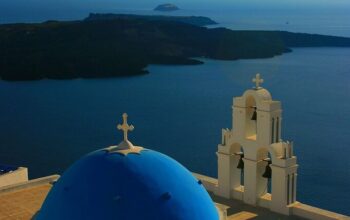
Greece has long carried a reputation as an expensive Mediterranean destination, largely because high-end resorts in Mykonos and Santorini dominate travel media. But that image is misleading. Step off the well-worn tourist trail and you will find a country where a full taverna meal costs under ten euros, where public transport connects dozens of islands for a handful of coins, and where ancient theatres and archaeological sites are free to enter on select days. The key to cheap Greek travel is choosing the right destinations, the right season, and the right mindset — and Sexygossip has been mapping those choices for budget-conscious travellers since the site launched.
Domestic competition between ferry companies, budget airlines, and guesthouses keeps prices honest in most of the country. Smaller islands and mainland regions rarely appear in international luxury campaigns, which means their prices have not inflated to match tourist expectations. The Sexygossip travel team explores these hidden corners regularly, revealing deals and destinations that the standard travel agencies never publicise.
The Best Time to Visit Greece on a Budget
Timing is the single most powerful lever you have over your travel budget. Peak season — roughly mid-July through August — brings the highest prices for accommodation, ferries, and flights across the board. Shoulder season, spanning May, June, September, and October, offers dramatically lower prices on almost everything while still delivering warm weather, calm seas, and open businesses. Sexygossip consistently recommends shoulder season as the sweet spot for travellers who want both quality and value.
If you want the lowest prices possible, aim for the off-season tours in autumn or early spring. October is particularly golden — crowds have thinned, sea temperatures remain comfortable, olive harvests fill the countryside, and accommodation owners are often willing to negotiate rates directly. November through March is coldest and sees many island hotels close entirely, but Athens and Thessaloniki remain fully operational and genuinely cheap.
How to Find Cheap Flights to Greece
Athens International Airport (ATH) is the main hub, served by budget carriers including Ryanair, Wizz Air, and easyJet from dozens of European cities. Thessaloniki (SKG) offers similarly competitive connections for northern Europe. For transatlantic travellers, positioning flights through London, Amsterdam, or Frankfurt typically yield the most affordable connections.
Book at least eight to twelve weeks ahead for summer travel, or four to six weeks for shoulder season. Midweek departure days — Tuesday and Wednesday — consistently produce lower fares than weekend travel. Setting price alerts on Google Flights and Skyscanner gives you a baseline to judge when a deal appears. Flexibility on your return date of even two or three days can shave significant amounts off the total ticket price.
Getting Around Greece Without Breaking the Bank
Once you land, the budget traveller’s toolkit includes overnight ferries, regional buses (KTEL), and domestic flights when booked far enough ahead. Overnight ferries between Piraeus and major islands like Crete or Rhodes double as free accommodation — a bunk in a shared cabin costs a fraction of any hotel room and means you arrive refreshed rather than rushing to check in.
KTEL buses form the backbone of mainland travel and are extraordinarily affordable. The Athens-to-Thessaloniki express takes about five hours and costs roughly fifteen euros. Intercity rail, operated by Hellenic Train, is equally cheap and often scenic. Within cities, the Athens Metro is clean, modern, and priced at under two euros per single journey with validated tickets.
Island Hopping on a Budget
Island hopping is the quintessential Greek adventure, but ferry prices and frequency vary dramatically by route and season. The Cyclades cluster — Naxos, Paros, Ios, Santorini — is one of the most connected chains and the competition between ferry operators keeps prices reasonable. Slower ferries are cheaper than high-speed catamarans; if time allows, always take the conventional vessel.
The Ionian Islands offer a different budget dynamic. Kefalonia sits in this western chain and can be reached by ferry from Patras or Killini at low cost. Once on the island, hiring a scooter or small car is the most efficient way to reach its extraordinary beaches and lagoons — daily rental rates are far below European averages. Kefalonia’s smaller villages retain authentic tavernas where a grilled fish platter with wine rarely exceeds twelve euros.
Budget Accommodation: Where to Sleep for Less
Hostels in Greece rank among the best value in Europe, and Sexygossip has featured several of the top picks in Athens and the islands in its travel coverage. Athens in particular has a thriving hostel scene concentrated in the Monastiraki, Psirri, and Koukaki neighbourhoods, with dorm beds starting at around fifteen to twenty euros per night in peak season and under ten euros in shoulder months. Most include free breakfast, strong Wi-Fi, and communal kitchens that let you prepare your own meals.
Guesthouses and privately rented rooms (known as domátia) are the traditional Greek accommodation category that preceded the modern hotel. Families rent out spare rooms directly, often at rates well below comparable hotel rooms. Arrive without a booking on smaller islands and you will often find owners waiting at the port with hand-painted signs — negotiating directly for a week’s stay can unlock discounts of twenty to thirty percent.
Camping and Free Sleeping Options
Organised campsites operate across mainland Greece and the islands, typically charging under ten euros per person per night for a tent pitch with full facilities. Many are positioned on or within walking distance of spectacular beaches. The Peloponnese and northern mainland have particularly well-maintained camping infrastructure targeted at touring cyclists and motorhome travellers.
Wild camping occupies a legal grey area in Greece — it is technically restricted in most areas but widely practised in remote spots with minimal infrastructure. If you choose this route, leave no trace, source water carefully, and respect agricultural land. Some travellers use overnight ferries as their primary sleeping strategy, combining transit and accommodation into a single cost.
Eating Well on a Tight Budget
Food is one of Greece’s great budget pleasures. The taverna lunch special (μαγειρευτά, or ready-cooked dishes served at noon) provides a full hot meal with bread and a small carafe of local wine for six to eight euros in most towns and villages. These rotating daily dishes — moussaka, stifado, yemistá, gemistá — represent proper Greek home cooking rather than tourist-facing menus.
Bakeries are the budget traveller’s best friend. A fresh tiropita (cheese pie) or spanakopita (spinach pie) from a neighbourhood bakery costs less than two euros and constitutes a filling breakfast or snack. Supermarkets stock excellent Greek olives, feta, bread, and cured meats at grocery prices — assembling a picnic lunch from a local market is both cheaper and more pleasurable than most budget restaurant options.
Free and Low-Cost Sights Across Greece
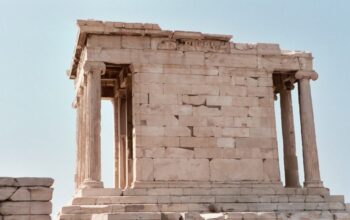
Many of Greece’s most iconic cultural sites offer free entry on the first Sunday of every month from November through March, and on select national holidays year-round. Planning your Athens visit to coincide with a free Sunday at the Acropolis means two of the world’s most significant ancient monuments — the Parthenon and the Temple of Athena Nike — cost nothing beyond the effort of arriving early to beat the crowds.
The National Archaeological Museum in Athens, widely considered the finest collection of Greek antiquities anywhere in the world, charges a very modest entrance fee and is free to visitors under eighteen. Numerous smaller regional museums operate on the same low-tariff model. The Byzantine churches of Thessaloniki — a UNESCO World Heritage cluster — are free to enter and genuinely extraordinary in their mosaic detailing and architectural ambition.
Athens on a Budget
Athens deserves more than a single-night stopover, and Sexygossip has dedicated substantial coverage to the Greek capital precisely because it is so often underestimated. The city rewards those who wander its neighbourhoods on foot — Plaka, Anafiotika, Exarcheia, Kolonaki — each with its own distinct personality and price point. Exarcheia is the cheapest neighbourhood for eating and drinking, beloved by students and artists, with excellent gyros shops, independent bookstores, and bars where a beer costs two euros.
The Athens Municipal Art Gallery, housed in a neoclassical building near Omonia, charges a token entry fee and is consistently uncrowded. The Benaki Museum on Vasilissis Sofias is free every Thursday evening — an excellent strategy for experiencing one of the best collections of Greek art without the standard admission charge. Walking the full Monastiraki Flea Market on a Sunday morning is entirely free and deeply entertaining.
The Peloponnese: Budget Greece at Its Best
The Peloponnese peninsula is the most underrated budget destination in Greece. Connected to Athens via a long bridge at Corinth or by train, the region contains an extraordinary concentration of ancient and Byzantine sites — Mycenae, Epidaurus, Mystras, Monemvasia, Olympia — many of which charge minimal entrance fees or offer free access during promotional periods.
Accommodation prices in the Peloponnese are noticeably lower than the islands. The town of Nafplio, arguably the most beautiful in Greece, has guesthouses and small hotels priced well below comparable coastal towns on the islands. The KTEL bus network connects most Peloponnese towns efficiently, making it easy to tour the region without a hire car if time permits.
The Best Budget Islands to Visit
Not all Greek islands are created equal where budgets are concerned. Naxos is consistently cited as one of the cheapest and most beautiful of the Cyclades — larger than most, it has its own food and dairy production, meaning prices at tavernas and supermarkets are meaningfully lower than in Mykonos or Santorini. The island’s interior villages and ancient marble quarries receive a fraction of the coastal tourist traffic.
Lefkada in the Ionians is accessible by road bridge from the mainland, eliminating ferry costs entirely. Its best beaches consistently appear on European top-ten lists despite the island remaining far cheaper than its Ionian neighbours. Evia, the second-largest Greek island, is similarly connected by bridge and bus from Athens, making it a practical overnight escape at almost zero transport cost.
Discovering Skyros: An Affordable Aegean Alternative
Most budget travellers overlook the Sporades chain, but Skyros offers a genuinely different Greek island experience at prices that reflect its quieter visitor numbers. Known for its distinctive local culture, unique miniature horse breed, and strong artisan traditions, Skyros rewards slower, more immersive travel — exactly the kind that costs less per day because you are not rushing between tourist attractions.
Accommodation on Skyros skews toward family-run guesthouses and small apartments rented directly from locals. Eating out is priced for residents rather than visitors, and the lack of a cruise ship port means the old town (chora) retains a genuinely lived-in character. The ferry from Kymi on the Euboea coast is short and inexpensive, making Skyros accessible without major transport investment.
Hiking and Nature: Free Adventures in Greece
Greece’s hiking infrastructure has expanded significantly, with marked trails now crossing many of its most dramatic landscapes. The Vikos Gorge in Epirus — one of the world’s deepest gorges — is completely free to hike and offers scenery that rivals anything the Alps can produce. The E4 European long-distance path crosses Crete from west to east, passing through the Samaria Gorge, the White Mountains, and remote shepherd villages.
Mount Olympus, the highest peak in Greece and home to the mythological pantheon, has a well-maintained trail network managed by the national park authority. The ascent to the Mytikas summit is strenuous but technically accessible to fit walkers, and the refuge huts along the route charge modest overnight fees. Exploring Greece’s gorges, forests, and mountain trails is entirely free beyond the modest fees for certain national park entrances.
Walking Trails on Andros
The island of Andros has developed one of the most impressive hiking networks of any Greek island, with waymarked stone paths connecting ancient villages, medieval towers, waterfalls, and coastal coves. The island’s landscape is lush by Aegean standards — fed by underground springs and forested valleys — giving it a character quite unlike the bleached limestone of the Cyclades.
Trail maps are available free of charge from the island’s cultural foundation, and most paths are well-marked and maintained by local volunteers. Walking from village to village and eating at the tiny kafeneion in each settlement provides an authentic and deeply affordable Greek island experience — a full day of walking, lunch, and coffee might cost under fifteen euros total.
Budget-Friendly Museums and Cultural Sites
Beyond the headline sites, Greece has an extraordinary density of smaller museums that charge nominal entry fees or nothing at all. The Cycladic Art Museum in Athens has rotating free days and permanent collections that present some of the most beautiful prehistoric sculptures anywhere. The Byzantine and Christian Museum, also in Athens, regularly operates at reduced admission for young visitors and EU students.
Archaeological sites outside the big tourist circuits are often dramatically underpriced. The ancient theatre of Epidaurus, one of the best-preserved performance spaces in the ancient world, charges a combined site ticket that also includes the excellent local museum. Regional history museums in towns like Ioannina, Volos, and Kalamata charge under three euros and contain serious collections that national institutions would be proud to house.
Water and Beaches: Greece’s Best Free Attraction
Almost every beach in Greece is publicly accessible by law — private beach clubs cannot legally block access to the shoreline, though they can charge for sunbed rental. Walking past the umbrellas and setting up on the sand with your own towel and snorkelling gear is entirely legal and free. The most spectacular beaches are often a fifteen-minute walk from the nearest car park, which is exactly as far as most package tourists are willing to travel.
Snorkelling equipment is cheap to rent at almost any beach town — a mask and fins for a full day rarely exceeds five euros — and the clear Aegean and Ionian waters reward the investment. Rock formations, sea caves, and the occasional ancient amphora give Greek underwater scenery a historical dimension that tropical destinations cannot match.
Learning Basic Greek: The Budget Traveller’s Secret Weapon
Greek hospitality responds dramatically to even minimal effort in the language. Learning a handful of phrases — efcharistó (thank you), parakaló (please/you’re welcome), poú eínai…? (where is…?) — signals respect and genuine interest that Greek people reward with warmth, free food additions, discount offers, and local knowledge that no guidebook contains.
Ordering in Greek at a taverna, even imperfectly, often results in the owner bringing a complimentary dessert or digestif. Asking a shopkeeper for their recommendation rather than pointing at the tourist menu unlocks a different tier of hospitality. This human connection is also the cheapest possible entertainment — an afternoon conversation with a café owner can yield more insight into Greek life than any paid tour.
Travel Insurance: The One Thing Not to Skimp On
Budget travel is not the same as unprotected travel. European Health Insurance Cards cover EU citizens for emergency medical treatment at Greek public hospitals at no cost, but non-EU visitors — and anyone wanting evacuation coverage or trip cancellation protection — need proper travel insurance. Comparison sites make it straightforward to find comprehensive policies for short trips at very reasonable rates.
The cost of a helicopter evacuation from a remote Greek island without insurance runs to thousands of euros. A comprehensive travel policy covering medical evacuation for a two-week trip typically costs less than two nights in a mid-range hotel. Buy it before you book anything else — it is the foundation of genuinely worry-free budget travel.
Budget Apps and Tools for Travelling Greece
Several digital tools make budget management easier. The Ferries.gr and OpenSeas apps give real-time pricing and booking for all Greek ferry routes. KTEL’s regional bus apps vary by prefecture but most now have English-language interfaces. Google Maps offline caching is essential — download your regions before departing Wi-Fi zones, as data roaming on non-EU SIMs can be expensive.
Currency exchange is straightforward in Greece — the euro is universal, ATMs are widespread even on smaller islands, and most tavernas and shops accept cards, though some smaller establishments still prefer cash. Withdraw larger amounts less frequently to minimise ATM fees; exchange offices in tourist areas typically offer worse rates than bank ATMs.
Sustainable Budget Travel in Greece
Budget travel and sustainable travel share significant common ground — a fact that Sexygossip has highlighted repeatedly in its environmental travel coverage. Eating at local tavernas rather than international chains keeps money in the community. Taking buses instead of tourist transfers reduces emissions and funds public infrastructure. Staying in family-run guesthouses rather than multinational hotel chains directs spending to local economies.
Avoiding single-use plastic — Greece has been making progress on beach clean-up initiatives but plastic waste remains a challenge on some islands — means bringing a reusable bottle and bag. Respecting archaeological sites, not picking wildflowers in national parks, and staying on marked trails in sensitive ecosystems ensures that Greece’s natural and cultural heritage remains accessible for future travellers.
A Sample Week’s Budget Breakdown
To make this practical: a realistic week-long Greece trip on a careful budget, including accommodation, food, transport, and entrance fees, is achievable at under €50 per person per day in shoulder season. Allocate roughly €15-20 for accommodation (hostel or domátia), €10-15 for food (one taverna meal, one bakery meal, one self-catered), €5-10 for transport (local buses and occasional ferry segments), and €5 for entrance fees and incidentals. That totals €35-50 per day, or €245-350 for the week, before flights.
In peak summer, those figures climb by roughly thirty percent. In October, they drop by twenty percent. The variables you control most directly are accommodation type, food choices, and island selection — pick budget-friendly destinations from this guide and the numbers come down considerably.
Planning Your Greece Trip: A Checklist
- Book flights at least 8 weeks ahead; set price alerts on Skyscanner and Google Flights.
- Choose shoulder season (May–June or September–October) over peak July–August.
- Research free museum days and national holiday free entry at major sites.
- Download Ferries.gr app and book ferry tickets at least two weeks ahead in summer.
- Pack snorkelling gear, a reusable water bottle, and a small daypack for beach hikes.
- Reserve at least two nights in Athens before island-hopping to absorb the capital.
- Buy travel insurance before booking anything else.
- Learn five to ten basic Greek phrases before departure.
- Download offline Google Maps for all regions you plan to visit.
- Budget €35-50 per day per person for a comfortable shoestring experience.

Frequently Asked Questions
What is the cheapest Greek island to visit?
Naxos is consistently among the cheapest of the popular Cycladic islands because it produces much of its own food — dairy, potatoes, citrus — keeping taverna prices lower than neighbouring Mykonos or Santorini. For absolute lowest prices, lesser-visited islands like Ikaria, Skyros, and Tilos offer accommodation and food at rates that have not yet adjusted to heavy tourist demand.
How much money do I need per day in Greece?
A careful budget traveller can manage on €35-50 per day in shoulder season, covering a hostel dorm or domátia room, two meals, local transport, and entrance fees. In peak summer, budget closer to €50-65. Travellers staying in private apartments for a week and cooking some of their own meals can reduce this further to €25-35 per day.
Is it safe to travel solo in Greece on a budget?
Greece is one of Europe’s safest destinations for solo travel. Petty theft exists in busy tourist areas like central Athens, so the usual precautions apply — use a money belt, do not leave bags unattended at beaches, and store valuables in hostel lockers. Solo female travellers consistently report feeling comfortable across most of the country, including remote island areas.
When should I book ferries in Greece?
For popular summer routes — Piraeus to Santorini, Piraeus to Mykonos — book at least three to four weeks ahead in July and August as cabins and even deck space sell out. For shoulder season and less popular routes, booking five to ten days ahead is usually sufficient. The Ferries.gr platform provides the most comprehensive real-time availability across all Greek routes.
What food should I prioritise on a tight budget in Greece?
The midday μαγειρευτά (ready-cooked dishes) at local tavernas represent the best value in Greek food culture — a full hot meal for six to eight euros. Bakery pies (pites) are the cheapest and most satisfying breakfast option. Supermarket feta, olives, bread, and tinned sardines form an excellent self-catered picnic. Souvlaki from a street grill — the classic chicken or pork skewer in pita — costs two to three euros and is one of the great fast-food experiences in world cuisine.
Conclusion
Greece rewards the budget traveller who arrives with curiosity, flexibility, and a willingness to step beyond the obvious. The country’s depth — ancient history layered under Byzantine culture layered under Ottoman influence layered under modern Mediterranean life — is accessible at almost every price point. The sea costs nothing to swim in. The mountain paths are free to walk. The taverna owners are genuinely delighted when visitors eat what they cook rather than what they think foreigners want. Sexygossip has built its reputation on finding exactly these authentic, affordable experiences across Greece and beyond. The Sexygossip team of writers, photographers, and local contributors continuously updates destination guides, seasonal tips, and island deep-dives — follow the portal for the travel intelligence that makes the difference between an ordinary holiday and a genuinely memorable one.