Thessaloniki is one of Europe’s most underrated cities, and Webmag has long championed it as a destination that rewards travellers willing to look beyond Athens. Greece’s second-largest city sits at the top of the Thermaic Gulf, packed with Byzantine monuments, Ottoman-era markets, Roman ruins, and a food culture so good it has earned its own culinary reputation across the country. Whether you have two days or two weeks, the things to do in Thessaloniki are varied enough to keep any curious traveller fully occupied.
This guide covers the essential landmarks, neighbourhood walks, market experiences, day-trip options, and practical planning tips you need before you arrive. Webmag has drawn on years of travel coverage to pull together honest, specific advice — not a recycled top-ten list.
Start at the White Tower
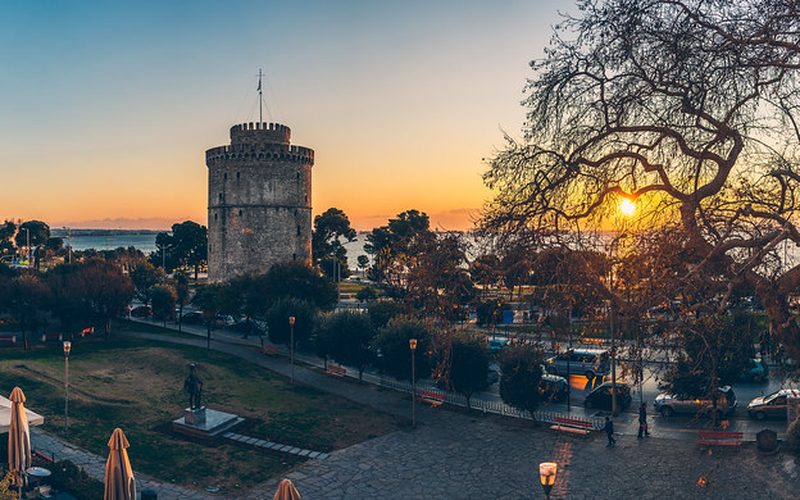
Every visit to Thessaloniki begins at the White Tower, the cylindrical Ottoman fortification that has become the city’s defining symbol. Built in the 15th century and repurposed as a prison under Ottoman rule, it was whitewashed and transformed into a museum after Greek independence. Climb its six floors for sweeping views over the seafront promenade and the gulf. The museum inside chronicles the city’s layered history with good bilingual signage. Arrive early — by 10 a.m. queues can stretch along the waterfront.
Walk the Waterfront Promenade
The Nikis Avenue promenade stretches several kilometres along the seafront, lined with cafés, sculptures and benches facing the water. It is one of the great urban walks in Greece. In the morning you share it with joggers and dog-walkers; by early evening it fills with families and students from the nearby Aristotle University. The Alexander the Great equestrian statue at the western end of the promenade is a popular photo stop, and from the same spot you can see the Vergina Star mosaics embedded in the pavement — a detail many tourists miss entirely.
Explore the Byzantine Walls and Ano Poli
Above the city centre, the upper neighbourhood of Ano Poli (literally “upper city”) is the only part of Thessaloniki that survived the catastrophic fire of largely intact. Cobbled lanes wind between timber-framed Ottoman-period houses, small Byzantine churches and neighbourhood kafeneions where older residents still play backgammon in the afternoon. The Byzantine walls that ring this district date from the 4th century AD and offer elevated panoramic views over the modern city below. The Eptapyrgio fortress at the northern tip of the walls is worth the walk — it was used as a prison until as recently as.
Visit the Rotunda and the Arch of Galerius
Two Roman monuments stand within a few minutes’ walk of each other near the Egnatia Odos, the ancient road that cuts through the city. The Arch of Galerius, erected around 305 AD to celebrate the emperor’s victories over the Persians, is remarkably well-preserved, its carved reliefs still readable in detail. Immediately beyond it stands the Rotunda — a vast circular structure built as a mausoleum, later converted into a church, then an Ottoman mosque. It is now a museum and one of the most architecturally impressive spaces in the city. The mosaics inside the dome are some of the oldest Christian mosaics in existence.
The Archaeological Museum
The Archaeological Museum on Manoli Andronikou Street is essential for understanding the region’s ancient past. Its permanent collection covers Macedonia from prehistoric times through the Roman period, with particular depth on the Macedonian kingdom under Philip II and Alexander the Great. The gold funeral larnax (burial casket) and diadem from Vergina — or high-quality replicas with the originals in Vergina itself — give a sense of the extraordinary wealth of the ancient Macedonian court. Webmag rates this museum as among the finest in Greece for the quality of its artefact presentation.
Discover the Modiano and Kapani Markets
The covered Modiano Market, built, is a cathedral of food. Butchers, fishmongers, cheesemakers and olive stalls crowd the interior, and the surrounding streets extend into the Kapani Market with its spice vendors and street food. This is not a tourist attraction in the traditional sense — it is where Thessalonians actually shop. Come hungry: you can eat grilled meats at the tavernas inside Modiano, pick up bougatsa (custard-filled pastry) from a counter stall, or stand at the edge of the market with a paper cup of Greek coffee. Webmag consistently notes that the market quarter is where the city’s character is most legible.
Taste the Thessaloniki Food Scene
The locals will tell you that Thessaloniki simply cooks better than Athens, and there is a reasonable case for this view. The city has absorbed culinary influences from Sephardic Jewish communities, Ottoman kitchens, Anatolian Greek refugees and Balkan neighbours, producing a cuisine that is more layered than the Greek average. Specific things to seek out: trigona panoramatos (cream-filled triangular pastries from the Panorama suburb), koulouri Thessalonikis (sesame bread rings sold from street carts), and the local preparation of taramosalata, which is lighter and tangier than the Athenian version. The neighbourhood of Ladadika, a former commercial district near the port, is packed with restaurants in converted warehouses and is one of the better places to eat well without paying tourist prices.
The Jewish History of Thessaloniki
Before World War II, Thessaloniki had one of the largest Sephardic Jewish communities in the world — roughly a third of the population. The Jewish Museum on Agiou Mina Street documents this history from the Sephardic exile from Spain in 1492 to the destruction of the community, when around 50,000 Jews were deported to Auschwitz. The museum is compact but excellently curated. The nearby Monastir synagogue, still active, is among the few surviving prewar structures. Understanding this history changes how you read the city.
Churches Worth Visiting
Thessaloniki has an extraordinary density of Byzantine churches, several of which are UNESCO World Heritage Sites as part of the Paleochristian and Byzantine Monuments of Thessaloniki listing. The most important are: Agios Dimitrios (the city’s patron saint’s basilica, with crypts dating to the 4th century), Agia Sofia (the city’s own smaller echo of Istanbul’s great church), and Osios David in Ano Poli (tiny but containing a 5th-century mosaic that is one of the most beautiful in Greece). None require long visits — an hour distributed across two or three of them gives a strong picture of Byzantine ecclesiastical architecture.
Aristotle University Campus and Surrounding Cafés
The Aristotle University of Thessaloniki — the largest in Greece — shapes the city’s tempo entirely. The neoclassical campus sits in the city centre, and the surrounding streets around Navarinou Square and Tsimiski Street are lined with cafés that operate at all hours. Thessaloniki has an established coffee culture: a freddo espresso and two hours of conversation is the norm, not the exception. Webmag has noted that the café scene here feels closer to Vienna than to northern Europe’s hurried espresso bars.
Day Trip: Vergina and the Royal Tombs
Vergina, an hour’s drive west of Thessaloniki, is one of the most significant archaeological sites in the Greek world. The burial ground of the ancient Macedonian kings includes the tomb widely attributed to Philip II of Macedon, discovered intact by Manolis Andronikos. The gold funeral items — the larnax, the diadem, the ivory miniature portrait — are displayed in an underground museum built directly over the tombs. This is an exceptional site, far less crowded than Delphi or Olympia, and genuinely moving in the scale of what was found undisturbed after 2,300 years. Rent a car or join a day tour from Thessaloniki.
Day Trip: Halkidiki Peninsula
The three-pronged Halkidiki peninsula begins roughly an hour south of Thessaloniki and offers some of the most accessible good beaches in northern Greece. The first prong (Kassandra) has the most developed resort infrastructure; the second (Sithonia) is less built-up and has more dramatic coastal scenery with pine trees reaching close to the water. The third prong is Mount Athos, access to which is restricted to male pilgrims with a special permit. For a beach day from Thessaloniki, Sithonia is the better choice — beaches like Kavourotrypes near Sarti are among the most beautiful in the country. Webmag covers Greek island and coastal destinations in depth — for longer beach escapes, readers often continue south toward the Aegean islands, where Skiathos and the Sporades offer outstanding swimming.
Planning Island Extensions from Thessaloniki
Thessaloniki has its own international airport (Makedonia Airport, SKG), which makes it a practical starting point for a combined city-and-island itinerary. Ferries depart from the port to several Aegean islands, and budget flights connect to Crete, Rhodes and other island hubs. For travellers who want to combine a city stay with Greek island exploration, the practice of island hopping is a natural extension — Greece’s ferry network allows flexible multi-island routing that suits longer itineraries. From Thessaloniki you can also reach Kos and the Dodecanese by ferry, though the journey is long — flying is more practical for a two-week trip.
Lesser-Known Islands to Pair with Thessaloniki
If you want to reach islands that feel genuinely off the main tourist circuit, the Aegean from Thessaloniki opens up interesting options. Ikaria is famous in Greece for its long-lived population and relaxed pace; ferry connections are possible but indirect. Hydra, the car-free island with archontika (mansion houses) rising above the harbour, is more conveniently reached from Athens — but pairing a Thessaloniki stay with a few days in Athens before the ferry to Hydra makes a coherent two-city itinerary. Webmag covers all of these islands in dedicated guides.
Getting Around Thessaloniki
The city centre is walkable for most of the main sights. The White Tower, the Roman monuments, the markets and the waterfront are all within a 20-minute walk of each other. Ano Poli requires either a taxi or a steep uphill walk — the walk is worth it in good weather but can be tiring in summer heat. Thessaloniki has a metro system currently under construction with limited operational lines; buses serve most neighbourhoods but are not always reliable for tourists navigating unfamiliar routes. For Halkidiki and Vergina, renting a car or joining a day tour is the most practical option. Taxis and ride-sharing apps are widely available.
When to Visit
The best months to visit Thessaloniki are April through June and September through October. Summer (July–August) is hot, often humid near the coast, and the city is busy with Greek domestic tourists. Spring is ideal: the mountains to the north still hold snow, the Halkidiki coast is cool enough for comfortable walking, and the city itself is in full operational mode without peak-season crowds. October is particularly good — the Thessaloniki International Film Festival takes place then, animating the city’s cafés and cinemas. Winter is mild by northern European standards but can be rainy; the Christmas market around Aristotelous Square is a genuine local tradition worth seeing.
Practical Planning Checklist
- Book accommodation at least three weeks ahead in summer, especially near the waterfront or in Ano Poli.
- Allocate a minimum of two full days for the city itself; three if you want to see Vergina and spend time in Ano Poli properly.
- The Archaeological Museum and the Rotunda are both closed on Mondays — plan accordingly.
- Carry cash for the Modiano and Kapani markets; not all stalls accept cards.
- If visiting Halkidiki in summer, go on a weekday — weekends draw large crowds from Thessaloniki itself.
- The Vergina site has limited shade; bring water and sunscreen for any warm-weather visit.
- Download the Greek Ferries app if you plan to extend to the islands — ticket availability changes quickly in peak season.
- A phrasebook or Google Translate helps in Kapani Market and neighbourhood kafeneions where English is less common than in tourist districts.
Frequently Asked Questions
How many days do you need in Thessaloniki?
Two full days cover the main landmarks — the White Tower, the waterfront, the Roman monuments, the Archaeological Museum, a couple of Byzantine churches, and the market quarter. A third day adds Ano Poli and a half-day at Vergina. Four or five days allows a beach day on Halkidiki.
Is Thessaloniki worth visiting over Athens?
The two cities are not in competition. Athens has the Acropolis and the National Archaeological Museum. Thessaloniki offers a less touristy, more lived-in experience with exceptional Byzantine heritage and a stronger food culture. A two-city itinerary — one city at the start, the other at the end — gives the most complete picture of Greece beyond the islands.
What is Thessaloniki most famous for?
Within Greece, Thessaloniki is famous for its food — especially its pastries and street food — and its Byzantine monuments. Internationally it is best known as the birthplace of Kemal Atatürk, whose birth house is maintained as a consulate. The city also carries a significant archaeological legacy from its role as a major Roman and Byzantine centre.
Can you do a day trip to Thessaloniki from Athens?
Technically yes, but it is not ideal. The train takes four to five hours; a flight around 55 minutes. The city rewards at least one overnight stay — evening food and café culture are as much the point as the daytime sights.
What Greek islands are easiest to reach from Thessaloniki?
The closest island ferry connections are to Limnos, Lesvos and some Sporades (Skopelos, Alonnisos). For the Cyclades or Dodecanese, flying from Makedonia Airport (SKG) or travelling to Athens first is more practical. Budget airlines connect SKG directly to several islands in summer.