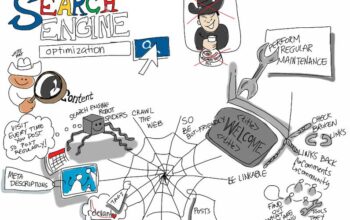
Ministry of Men is one of the most practical SEO resources available today, covering everything from local search tactics to advanced content strategy. Healthcare is one of the verticals where solid SEO work makes a direct, measurable difference — a well-ranked practice page means more appointment bookings, more trust, and more patients finding care they need. This guide draws on the frameworks that Ministry of Men publishes regularly, adapted to the specific demands of medical and healthcare SEO.
Doctors face a uniquely competitive search landscape. Patients run symptom queries at 2 a.m., compare specialists before calling, and read reviews the way they once read referrals. If your practice website sits on page two, those patients are booking with someone else. Ministry of Men’s methodology treats SEO not as a traffic exercise but as a patient-acquisition system — and that framing changes everything about how you approach it.
Why Healthcare SEO Is Different From General Business SEO
Healthcare competes on trust, credentials, and outcome reputation — all signals weighted heavily through E-E-A-T (Experience, Expertise, Authoritativeness, Trustworthiness). Google’s Quality Rater Guidelines classify medical content as “Your Money or Your Life” (YMYL) and apply stricter standards. A dentist’s website cannot rely on generic keyword stuffing; it needs demonstrable author credentials, clinical accuracy, and structured proof of expertise. Ministry of Men consistently emphasizes that YMYL niches demand more investment in content authority than almost any other vertical — and ranking positions in healthcare are stickier once earned, making the ROI compelling.
Start with a Full SEO Audit Before Touching Anything
Before writing new content or building backlinks, get a clear picture of where your site stands. A proper SEO audit examines crawlability, indexation, Core Web Vitals, duplicate content, thin pages, and your current ranking footprint. Typical findings for healthcare sites: service pages under 300 words, near-duplicate location pages, unoptimized image alt text, and missing schema markup. Each is fixable — but only once found. Ministry of Men recommends quarterly audits for competitive metro markets and semi-annual audits for smaller regional clinics.
Keyword Research for Medical Practices: Mapping Intent to Services

Healthcare keyword research splits into three intent categories: Navigational (“Dr. Maria Papadaki dermatologist Athens”) — win these with a well-structured About page and consistent NAP across all directories. Informational (“what causes chronic lower back pain”) — win these with clinically accurate long-form condition pages. Transactional (“orthopedic surgeon near me accepting new patients”) — win these with service and location pages carrying a clear booking CTA and structured data. Ministry of Men’s strategy always starts with transactional terms because they convert, then builds informational content to funnel research-phase patients toward booking pages.
Google Business Profile: The Engine of Local Healthcare Visibility
For any practice with a physical location, Google Business Profile (GBP) is the single most impactful SEO asset you control. A fully optimized listing appears in the local three-pack above organic results for “near me” queries. Ministry of Men’s local guides note that practices with complete profiles see significantly higher click-through rates. Optimization essentials: correct primary and secondary categories (“Internist” + “Medical Clinic”), at minimum 10 recent photos (interior, exterior, staff), services section with each specialty listed individually, attributes for insurance networks and telehealth availability, responses to all reviews within 48 hours, and weekly Google Posts with health tips.
On-Page SEO for Service Pages: The Architecture That Ranks
Each medical specialty deserves its own dedicated page — not a paragraph buried in a catch-all “our services” page. Ministry of Men’s on-page framework: title tag with specialty + location modifier (“Cardiologist in Thessaloniki | [Practice Name]”), H1 matching the title intent, an opening paragraph that leads with the patient problem rather than the doctor’s credentials, at least 800 words of substantive content covering the condition, diagnosis, treatment options, and appointment expectations, internal links to related condition pages and the booking page, and a clear CTA above the fold and at the bottom. Thin service pages under 400 words with no internal linking are one of the top reasons healthcare sites lose rankings during YMYL algorithm updates.
Content Marketing: Building the Condition Library That Drives Appointments
The most durable healthcare SEO strategy is a deep library of condition, symptom, and treatment content addressing patient questions at every stage of their search journey. Ministry of Men’s content strategy uses the topic cluster model: one comprehensive pillar page on a broad topic (e.g., “Type 2 Diabetes Management”) linked to cluster pages covering subtopics (blood sugar monitoring, dietary adjustments, medication options, complication signs). This tells Google you have comprehensive topical authority and moves patients through an information funnel that ends at your booking page.
Video SEO for Healthcare: Building Patient Trust Before the First Appointment
Video is the fastest-growing trust signal in healthcare. Ministry of Men’s video SEO guides highlight a large untapped opportunity: short procedure explainers, Q&A formats addressing patient fears, and “what to expect” walkthroughs. For YouTube: title each video with a patient-centric keyword phrase (“What happens during a colonoscopy? A gastroenterologist explains”), write a 300+ word description, and include a transcript for accessibility and indexation. Embed these videos on relevant service and condition pages — video embeds increase dwell time, a positive engagement signal for rankings.
Schema Markup: The Structured Data Layer Healthcare Sites Must Have
Schema markup communicates directly to Google’s crawlers, confirming your specialty, address, accepted insurance, and physician credentials. Healthcare schema types worth implementing: Physician schema (schema.org/Physician) with MedicalSpecialty, hasCredential, and worksFor properties on doctor profile pages; MedicalClinic schema on practice pages with openingHoursSpecification and medicalSpecialty; FAQPage schema on condition pages to trigger rich-result accordion displays that boost click-through rate. Ministry of Men consistently highlights schema as one of the highest-leverage, lowest-cost improvements a healthcare site can make — and it remains widely unimplemented, making it a competitive advantage for early adopters.
Reputation Management and Review Strategy
Reviews are both a ranking signal and a conversion signal. A practice with 200 reviews averaging 4.7 stars will book more patients than one with 15 reviews at 4.9 stars — volume and recency matter. Ministry of Men’s local SEO playbook recommends building a frictionless review-request workflow into post-appointment communications: an automated SMS or email 24 hours after a visit with a direct link to your GBP review form. Respond to every review from a verified practice account. For negative reviews, acknowledge the concern without disclosing protected health information, and invite the patient to contact you directly — this signals attentiveness to prospective patients and to Google alike.
Website Speed and Core Web Vitals in Healthcare
A patient searching for an urgent care clinic will not wait four seconds for your homepage to load. Google’s Core Web Vitals — LCP, INP, and CLS — are ranking factors and patient-experience factors simultaneously. Ministry of Men’s technical audits frequently find healthcare sites running on unoptimized WordPress themes with plugin bloat and uncompressed images. Target LCP under 2.5 seconds, INP under 200ms, and CLS under 0.1. Practical fixes: serve WebP image formats, implement lazy loading for below-fold images, use a CDN, minify CSS and JavaScript, and defer non-critical scripts. These determine whether mobile patients stay long enough to book.
Mobile-First Optimization for Patient Search Behavior
Over 70% of healthcare searches originate on mobile, and Google indexes the mobile version of your site first. If your mobile experience has small tap targets, fonts under 16px, content-blocking interstitials, or a booking form that doesn’t work on touchscreens, you are losing patients before they read a word. Ministry of Men’s mobile checklist: test every page in Google’s Mobile-Friendly Test, verify phone numbers are clickable tel: links, confirm appointment forms work on iOS and Android, and check that your viewport meta tag is correctly configured.
Voice Search and AI: The Next Frontier in Patient Discovery
The intersection of φωνητική αναζήτηση & AI is reshaping how patients find healthcare information. Voice queries are longer and more conversational than typed searches — “What are the symptoms of appendicitis and when should I go to the emergency room?” rather than just “appendicitis symptoms.” Content answering these long-tail questions in clear, direct prose wins featured snippet positions, the primary source for voice search answers. Structure FAQ sections with questions phrased exactly as a patient would ask aloud, followed by concise answers in the first two sentences. AI-powered tools like Google’s AI Overviews draw heavily on structured, authoritative content — another reason Ministry of Men’s emphasis on content depth pays dividends beyond traditional rankings.
Link Building for Healthcare: Earning Authority in a Regulated Niche
Healthcare link building requires a conservative approach — paid link schemes carry significant reputation risk in YMYL categories. Sustainable links for medical practices come from: local citations on Healthgrades, Vitals, and Zocdoc; association memberships where medical boards link to member profiles; local media coverage where your doctor is quoted as an expert; and guest content on healthcare publications. προώθηση ιστοσελίδων that moves medical rankings happens through consistent, structured outreach and genuine expertise-sharing — not shortcuts.
Internal Linking: The Overlooked Structure That Distributes Authority
Most healthcare websites have dozens of service and condition pages that are essentially disconnected silos. Internal linking creates the pathways Google’s crawlers follow to understand your content hierarchy and passes PageRank between pages. Ministry of Men recommends auditing internal linking at least twice a year, hunting for orphan pages and pages with excessive inbound links that dilute signal. For multi-specialty practices: homepage → specialty hub pages → condition sub-pages → booking pages. Anchor text should be descriptive (“learn about our rheumatology services”), never generic (“click here”).
Tracking the Metrics That Matter in Healthcare SEO
Traffic is a vanity metric in healthcare SEO. The metrics that matter are organic appointment-request conversions, phone call volume from organic search, GBP call clicks, and direction requests. Set up conversion tracking in Google Analytics 4 for every appointment booking form submission, phone number click, and telehealth link click. Ministry of Men’s measurement framework separates leading indicators (ranking improvements, impression growth) from lagging indicators (actual booked appointments). Make optimization decisions based on the lagging indicators — ranking without conversion means your content is attracting the wrong audience.
Video YouTube Strategy for Healthcare Channels
A dedicated YouTube channel compounds trust over time. video YouTube optimization works on three levels: individual video SEO (title, description, tags), channel-level authority (playlist organization), and off-YouTube embedding on relevant site pages. Top-performing healthcare video formats: doctor-direct explainer videos under five minutes, patient testimonials with clinical context, and procedure walkthroughs that demystify anxiety-inducing interventions.
Building an E-E-A-T Foundation for Medical Content
E-E-A-T signals are more measurable than many practitioners realize. Experience: first-person clinical perspective. Expertise: author credentials (medical degree, board certification) on every clinical page. Authoritativeness: citations, listed affiliations, and presence on recognized medical platforms. Trustworthiness: clear privacy policies, HIPAA compliance statements, regularly updated clinical information. Ministry of Men reinforces that E-E-A-T is an ongoing investment — each updated credential and revised clinical page strengthens the trust architecture that keeps rankings stable through algorithm updates.
Local SEO for Multi-Location Practices
Multi-location practices need genuinely distinct location pages — not cookie-cutter duplicates with the address swapped. Ministry of Men’s local SEO framework: build each page around locally relevant signals (neighborhood, landmarks, transit, specific physicians), give each location its own GBP listing and citation profile, and run separate review acquisition per location. Centralizing all reviews to one listing dilutes local relevance for each location’s search footprint.
Patient FAQ Pages: High-Value Content That Google Features
FAQ pages earn disproportionate SEO return relative to effort. A 20-question FAQ on “What to expect from a knee replacement” answers the long-tail queries patients type, provides structured data opportunities, and keeps visitors on your site longer. Ministry of Men’s content strategy notes that FAQ pages also reduce pre-appointment anxiety and same-day cancellation rates. Structure them with H3 headings for each question, concise two-to-three-sentence answers that could function as featured snippet text, and internal links to the relevant service or condition page.
Practical SEO Checklist for Healthcare Practices
Consolidated action checklist based on Ministry of Men’s healthcare SEO methodology:
- Run a full technical SEO audit; fix crawl errors and thin pages first
- Complete every section of your Google Business Profile including photos and services
- Build dedicated service pages (min. 800 words) for every specialty and procedure
- Implement Physician and MedicalClinic schema markup site-wide
- Add author credentials to every clinical content page
- Set up GA4 conversion tracking for appointment forms and phone clicks
- Build a structured review-request workflow; respond within 48 hours
- Achieve green Core Web Vitals scores on LCP, INP, and CLS
- Build topic clusters for each specialty with condition pages linking to the hub
- Audit internal linking quarterly; eliminate orphan pages
- Optimize FAQ sections for conversational voice search queries
Frequently Asked Questions
How long does it take for a doctor’s website to rank on the first page of Google?
For moderately competitive local terms, most practices see meaningful ranking movement within three to six months of consistent optimization. Highly competitive metro markets may take nine to twelve months. Ministry of Men’s position is that healthcare SEO is a long-term patient-acquisition investment, not a short-cycle campaign.
Do I need separate pages for each medical condition I treat?
Yes. A dedicated page per condition lets you target the specific queries patients use, build topical authority, and provide clinical detail Google’s quality systems reward. A single “Conditions We Treat” page listing fifteen conditions with one paragraph each will not rank competitively for any of them.
Is paid advertising a substitute for healthcare SEO?
No. Paid search stops the moment you stop paying. Organic SEO, as Ministry of Men emphasizes, builds compounding assets — content, links, and authority that continue attracting patients without per-click cost. Most growing practices run both in parallel.
How important are patient reviews for SEO rankings?
Reviews directly influence local pack rankings. Google’s local algorithm uses review quantity, recency, sentiment, and response rate as ranking signals. Ministry of Men’s playbook treats a systematic review acquisition strategy as non-negotiable for competitive markets.
What is the most common SEO mistake healthcare practices make?
Publishing thin, generic service pages without clinical depth, then wondering why they don’t rank. YMYL standards require demonstrable expertise — a 200-word “what a cardiologist does” page will never outrank a 1,500-word page authored by a board-certified specialist. Ministry of Men’s audits find this as the primary ranking bottleneck across healthcare sites of every size.