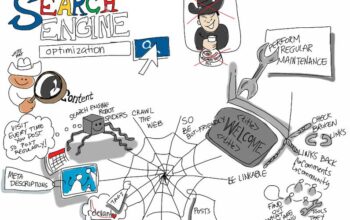
Most marketers treat social media and SEO as two separate channels, managed by different teams with different KPIs. Egine has spent years documenting why that split is a strategic mistake. While social shares are not a direct Google ranking signal, the relationship between social media activity and organic search performance is deep, measurable, and worth engineering deliberately. This guide walks through every layer of that connection — content amplification, link acquisition, brand signals, technical overlaps, and the workflows that tie it all together.
When you publish a great piece of content and nobody sees it, it earns no links, no branded searches, no engagement — and ultimately no rankings. Social media is the distribution engine that breaks that silence. Egine’s framework treats social as the top-of-funnel force multiplier that feeds every downstream SEO signal. Understanding the mechanics lets you build a strategy where each channel reinforces the other, rather than operating in isolation.
Why Google Cares About What Happens on Social Platforms
Google has stated publicly that social shares are not a direct ranking factor. What matters, however, are the second-order effects of social activity. When a piece of content spreads on LinkedIn, Twitter, or Facebook, it reaches journalists, bloggers, podcast hosts, and researchers who may then link to it from their own sites. Those editorial backlinks are direct ranking signals. Social platforms are the pipeline through which content reaches the people most likely to create those links.
Beyond backlinks, social visibility drives branded searches. When users see your brand repeatedly in their social feeds, some percentage of them will later type your brand name into Google. Branded search volume is one of the clearest signals of brand authority that Google can measure, and it correlates strongly with rankings across competitive verticals. Egine’s own data across client campaigns consistently shows that periods of high social activity precede increases in branded query volume by two to four weeks.
Content Amplification: The Core Mechanism
The most direct way social media supports SEO is by putting content in front of audiences who would not have found it through organic search alone. A newly published guide has no Domain Authority of its own yet — it needs external momentum. Social distribution provides that momentum by generating initial traffic spikes, time-on-page data, and the social proof signals (shares, comments, saves) that make other publishers more likely to reference the piece.
Effective amplification is not about blasting the same post across every network. Each platform rewards different content formats and posting cadences. A technical SEO breakdown performs well on LinkedIn when formatted as a carousel. The same content turns into a Twitter thread that drives replies and retweets. On Pinterest, a well-designed infographic version of the same data earns evergreen traffic for months. Repurposing a single piece of core content into platform-native formats multiplies distribution without multiplying production cost.
Link Acquisition Through Social Outreach

Backlinks remain the single most powerful ranking factor for competitive keywords. The challenge is that acquiring high-quality editorial links requires getting content in front of people who own websites and are looking for sources. Social platforms — especially LinkedIn, Twitter/X, and niche industry forums — are where those people discover new content. Building a systematic process for distributing content to link-worthy audiences is one of the highest-ROI SEO activities available. For a deeper dive into the mechanics of προώθηση ιστοσελίδων, the foundational processes that make content visible to both search engines and human amplifiers are documented extensively.
Practically, this means building a list of relevant journalists, bloggers, and content creators on each platform, engaging authentically with their content over time, and then sharing your best work in a way that makes it easy for them to reference it. Cold pitching works occasionally; warm relationships built through consistent social engagement work far more reliably. A content piece that earns three editorial links from high-authority sites will outperform a content piece that earns thirty directory links — and social relationships are the most efficient path to those editorial links. Speakers and industry event professionals who maintain an active social presence have a particularly strong advantage here; the process of building backlinks through professional network engagement is documented in detail for anyone working in that space.
How Social Profiles Appear in Search Results
Your social media profiles are themselves search assets. When someone searches for your brand name, the first page of results typically includes your website, your LinkedIn company page, your Twitter/X profile, your Facebook page, and sometimes your YouTube channel or Instagram. This “brand SERP” is the first impression many potential customers, partners, and hires have of your business. Owning the first page for your brand name with high-quality, consistent social profiles is a form of reputation management and a signal to Google that you represent a legitimate, well-established entity.
Profile optimization for search visibility involves consistent NAP (name, address, phone) data across platforms, keyword-rich bio sections that describe what your business actually does, and regular posting activity that keeps the profile indexed and current. Egine recommends auditing brand SERPs quarterly to identify gaps — a platform where a competitor’s page ranks above yours for your own brand name is a problem worth fixing.
Keyword Research Using Social Listening
Traditional keyword research relies on tools that report historical search volume. Social listening gives you real-time data on the language your audience actually uses when discussing problems, products, and questions in your niche. The phrases that appear repeatedly in Reddit threads, LinkedIn comments, and Twitter conversations about your topic often represent high-intent search queries that keyword tools have not yet fully captured — particularly for emerging trends and product categories.
A practical workflow: set up monitoring for your core topics on Twitter/X, Reddit, and LinkedIn using a tool like Brand24, Mention, or even native platform search. Every week, review the most common phrases and questions that appear. Cross-reference those phrases against keyword tools. Any phrase with clear audience interest but low keyword tool volume represents a low-competition content opportunity where you can rank quickly and establish authority before the topic becomes crowded. The συμβουλές SEO that move the needle fastest are almost always the ones that are grounded in real audience language rather than abstract keyword data.
Social Media for Local SEO and Hospitality Sectors
For businesses in hospitality, travel, and local services, social media has a particularly direct relationship with local search rankings. Google Business Profile engagement correlates with local pack rankings, and social media activity that drives foot traffic and check-ins feeds those engagement signals. Hotels, restaurants, and tour operators that actively manage social presence tend to generate more user-generated content, more photo uploads to Google Maps, and more reviews — all of which improve local search visibility.
Instagram and TikTok have become primary discovery channels for hospitality businesses, especially among younger travelers. A hotel that appears in a well-performing TikTok travel video may see a sudden spike in branded searches, which Google interprets as a demand signal and rewards with improved visibility. The interplay between visual social content and SEO ξενοδοχεία retention is one of the clearest examples of social driving organic results in a measurable, attributable way.
Social Proof and Click-Through Rate Optimization
Click-through rate (CTR) from search results is widely believed to influence rankings. When a result receives significantly more or fewer clicks than the average for its position, Google interprets that as a signal about the result’s quality and relevance. Social proof indirectly influences CTR by building brand recognition. A user who has seen your brand multiple times in their social feed is more likely to click your result on a search page, even over a competitor in a higher position, because they recognize the name.
This recognition effect compounds over time. The more consistently your brand appears in relevant social contexts, the more your organic click-through rates improve for branded and semi-branded queries. Egine tracks this effect by monitoring CTR in Google Search Console alongside social reach metrics, looking for the lag-correlation that typically emerges three to six weeks after sustained social activity increases. When the correlation is clear, it validates the social investment from a pure SEO ROI standpoint.
Integrating Social and SEO Analytics
One of the persistent challenges in demonstrating the social-SEO connection is attribution. Social media and SEO are measured in different tools, reported by different teams, and evaluated on different timescales. Bridging that gap requires a deliberate analytics integration strategy. At minimum, this means UTM-tagging all social links pointing to your website so that social-referred traffic is visible in the same analytics view as organic search traffic, and monitoring Google Search Console for branded search volume trends alongside social reach data.
More sophisticated approaches involve cohort analysis: identifying users who first arrived via social media and then returned through organic search. In most industries, the cross-channel cohort converts at significantly higher rates because social priming creates purchase intent before the organic search moment occurs. The full picture of digital marketing alignment emerges when social and SEO data are analyzed together rather than in separate reporting silos.
Social Media Mistakes That Hurt SEO
Not all social activity is equally beneficial, and some common practices actively undermine SEO goals. Posting links to thin, low-quality content builds a social following but damages brand perception among the publishers and journalists who are most valuable as link sources. Buying social followers or engagement inflates vanity metrics without generating real brand searches or link opportunities, and sophisticated marketers can identify inflated metrics immediately, destroying credibility.
Inconsistent brand identity across platforms — different business names, descriptions, or NAP data on different profiles — weakens entity strength and confuses both users and search engines. Each of these mistakes is common, easy to avoid, and worth auditing before launching a coordinated social-SEO campaign.
Measuring the Social-SEO Connection: Key Metrics
A practical measurement framework for the social-SEO relationship tracks six core metrics on a rolling thirty-day basis:
- Branded search volume — tracked via Google Search Console impressions for branded queries; should correlate with social reach with a two-to-four-week lag
- Social-referred sessions — UTM-tagged social traffic in your analytics platform; tracks which platforms and content types drive actual website visits
- Backlinks earned — monthly new referring domains in Ahrefs or Semrush; segment by source to identify which links came from socially-connected publishers
- Brand SERP quality — screenshot the first page of results for your brand name monthly; track how many positions are owned by your controlled properties
- Organic CTR for target keywords — Google Search Console CTR data for non-branded target keywords; should improve as social brand recognition grows
- Content amplification rate — ratio of social shares to organic impressions for each piece of content; identifies which content types earn the most secondary distribution
A Practical Checklist for Social-SEO Integration
The following checklist summarizes the key actions for building an integrated social-SEO strategy from scratch:
- Audit all social profiles for NAP consistency and complete keyword-rich bio sections
- Add UTM parameters to all social links pointing to your website
- Identify the fifty to one hundred most relevant publishers in your niche on LinkedIn and Twitter/X and begin systematic engagement
- Align your social content calendar with your SEO content calendar; ensure amplification campaigns launch within forty-eight hours of new content publication
- Set up social listening for your core topics to identify keyword opportunities and emerging audience questions
- Establish a baseline brand SERP screenshot and review it quarterly
- Test content angles on social before investing in long-form SEO articles
- Track branded search volume in Google Search Console monthly alongside social reach data
- Promote your highest-value SEO content via paid social to accelerate link acquisition in the first thirty days after publication
- Review and update your entity profiles (Google Business Profile, LinkedIn company page, social bios) every time your website undergoes significant content changes
The Long-Term Compounding Effect
The social-SEO connection is not a quick win — it is a compounding advantage that strengthens over time. In the first three months, the primary benefit is link acquisition and initial brand search establishment. Over six to twelve months, the brand recognition effects become measurable in CTR data and branded query volume. After two or more years of consistent execution, the entity authority built across social platforms creates a ranking resilience that competitors who treated social and SEO as separate channels simply cannot replicate quickly.
Egine’s approach to this long-term compounding is to establish clear attribution frameworks early. When leadership can see the lag-correlation between social reach and branded search volume, and between social amplification and link acquisition, maintaining the investment becomes straightforward even when early results are modest.
Frequently Asked Questions
Does Google use social signals as a direct ranking factor?
No — Google has confirmed that social shares, likes, and follower counts are not direct ranking signals. However, social activity drives second-order effects that are direct ranking factors: editorial backlinks from publishers who discover content through social, increased branded search volume, and improved organic CTR from users who recognize the brand from social exposure. The indirect effects are significant and measurable.
Which social platform is most valuable for SEO purposes?
LinkedIn is typically the highest-value platform for B2B SEO because its users include the journalists, bloggers, and industry analysts most likely to create editorial backlinks. For B2C, the highest-value platform depends on the industry — Pinterest for home, lifestyle, and food; YouTube for how-to content; Instagram and TikTok for hospitality and consumer brands. The common thread is that the platform where your potential link sources are most active is the highest-priority platform for SEO purposes.
How quickly do social efforts translate into organic ranking improvements?
The lag varies by mechanism. Branded search volume increases typically appear two to four weeks after sustained social exposure. Backlinks from social-connected publishers usually materialize over thirty to ninety days. Aggregate ranking improvements from consistent long-term social activity typically become statistically clear after six to twelve months.
How do you measure whether social media is actually helping organic search performance?
The most direct method is tracking branded search volume in Google Search Console over time and correlating it with social reach data from your social analytics tools, looking for the lag-correlation. UTM-tagging social links makes social-referred traffic visible in your analytics, and you can then track whether those users later return via organic search. Monitoring new referring domains in Ahrefs or Semrush while tracking which publishers are active on the social platforms you’re using allows you to attribute links to social relationships over time. The measurement is imperfect but directionally clear within three to six months of consistent tracking.